For the last decade or so, I’ve taught Working Class Literature at Portland Community College. When I tell people I teach this class—the only course explicitly about class at PCC—they often ask me about Upton Sinclair or Charles Dickens. I don’t teach those guys. Our reading focuses largely on types of labor more familiar to Oregonians in 2026: serving, sex work, driving, delivery, domestic work, and, always, managing to do without. We focus on the diversity of experiences that have always made up the working class—but haven’t always been part of the conversation about being working class.
In the classroom, literature powers new visions of resistance and survival. From tales of workers resisting bully bosses—“We kicked our boots against the cartons of supplies, making a sullen, violent noise” (Nanni Balestrini, We Want Everything)—to surviving endless hours under fluorescent lights and the boss’s eye—“I hated my job, but I liked the fact that I could do it” (Miranda July, “Something That Needs Nothing”)—the words we read and the stories we share help us understand the exploitation that is built into structures of work, and the long history of organized labor and community care that makes our lives possible now. Over the years, my class has included folks organizing unions at New Seasons, Starbucks, and Burgerville. It has included people who went on to become Portland Public School teachers willing to strike for a better deal for their students, and people who are organizing their communities today against the injustices of ICE.
I feel lucky that part of my labor is to maintain a space to foster our knowledge of a deep and fundamental reality: Most of us are, and will always be, workers. And, for now, we work in a world where, more often than not, we will continue to be robbed of fair wages and dignity.
By reading stories and poems together about the lives of working people, we connect in ways that can help us forge new communities and commitments and move toward a better, fairer world.
To share a glimpse of our work in the classroom, here are some reflections from two former students.
—Nicholas Hengen Fox
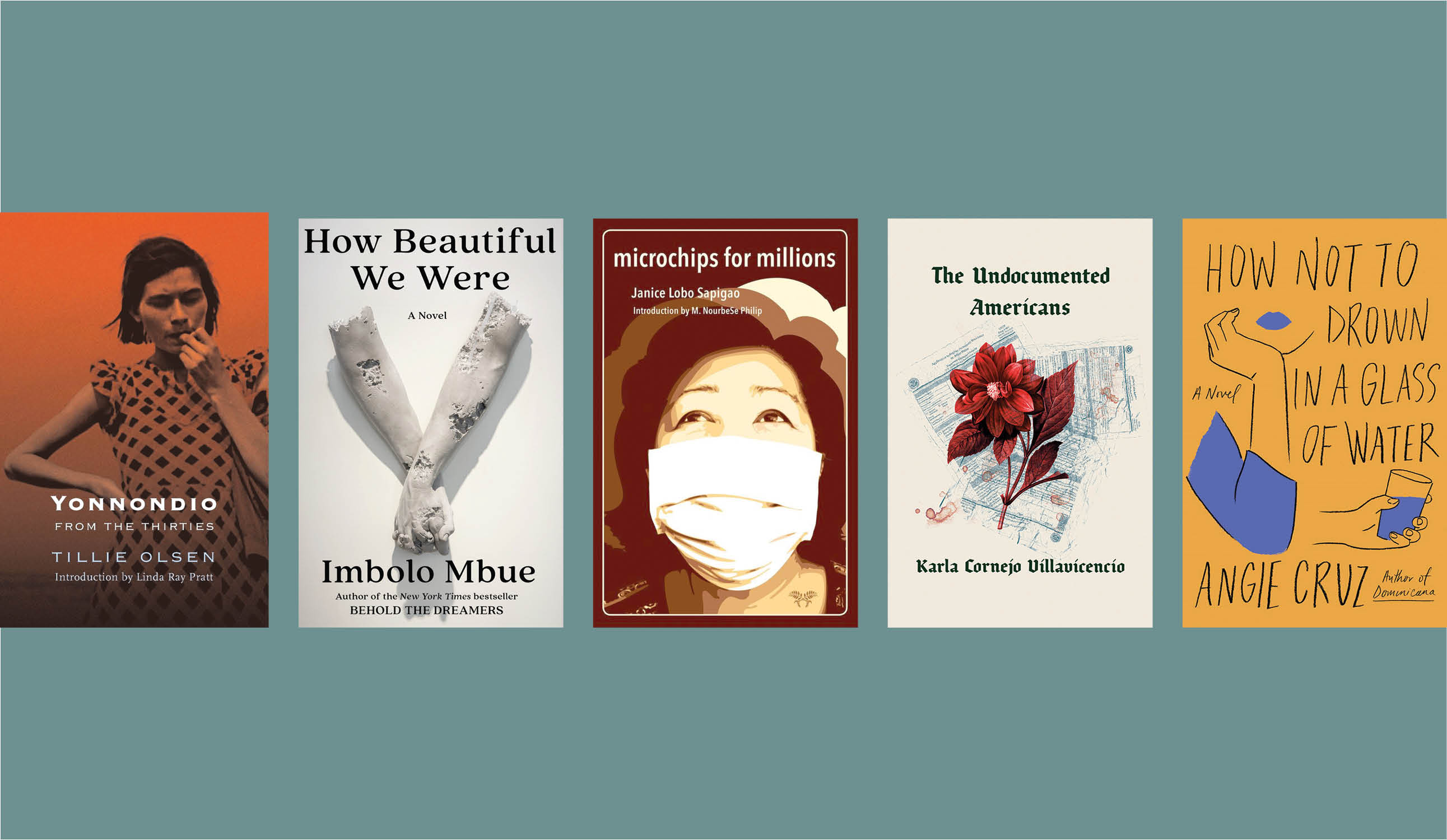
Yonnondio: From the Thirties
by Tillie Olsen
Nearly a hundred years later, this unfinished novel, written in the 1930s and published in the 1970s, stands out to me as one of the most original books I’ve read. It’s not a memoir, but is certainly inspired by the life and politics of the author, Tillie Olsen, a daughter of immigrants who dropped out of high school to join the workforce at fifteen. She was active in union organizing, a member of the Communist Party, and a working-class mother, all before she started to write the novel. Yonnondio follows an ever-growing family, the Holbrooks, as they migrate in search of work that will pay enough to sustain them—but never quite find it. Olsen writes with the emotion and clarity of a poet, and though Yonnondio is sometimes punishing in its commitment to the specificity and relentlessness of the suffering endured by the Holbrooks, the novel is buoyed by moments of respite—of transcendence—that are written with just as much vigor, that are just as piercing and true.
From the mines of Wyoming to the slaughterhouses of Omaha, the consequences of poverty accumulate. The eldest daughter, Mazie, is the central figure, and the ills of an uncaring society are laid bare through the eyes of this child as she tries to make sense of the world around her. There is the mother, Anna, who wants a better life and an education for her children, whose full-time job is “somehow to skimp off of everything that had long ago been skimped on, somehow to find more necessities the body can do easiest without.… This poverty’s arithmetic for Anna.” Olsen describes the working conditions that Jim, the father, endures at a packing plant: “Hell. Half-seen figures through hissing cloud vapor, the live steam from great scalding vats. Hogs dangling, dancing along the convey, 300, 350 an hour.” Olsen sometimes breaks form and expands her narrative lens to include society at large, writing lines that are more sharply critical of capitalism: “A job was straw and every man (having nothing to sell but his labor power) was the drowning man who had no choice but hang onto it for not-so-dear life.”
While times have changed, the squeeze of capitalism is still felt as keenly as ever by many people. Tillie Olsen was a talented writer who, because of her economic position, was forced to confront the injustices of the labor system. Olsen’s efforts and those of so many others in pushing for workers’ rights are the reason for the labor protections we have today. Reading this novel in 2025 made me feel connected to the working class throughout history and into the future, when I hope, with effort from the workers of today, subsequent generations can live in a world like the one Olsen envisions, a world where “a human could be a human for the first time on earth.”
—Jalen Rose
How Beautiful We Were
by Imbolo Mbue
Microchips for Millions
by Janice Lobo Sapigao
The Undocumented Americans
by Karla Cornejo Villavicencio
How Not to Drown in a Glass of Water
by Angie Cruz
Imbolo Mbue’s novel, How Beautiful We Were, shows how the spirit of solidarity can inspire a village to challenge oppression, reminding us that we are all we have, that “work will be there waiting for us tomorrow,” and that the rules imposed on us today are based on
evil principles.
Despite the struggles of the working class, a consequential privilege exists in the United States—a privilege that paves the way for resistance against injustice and generates a movement of informed participants. Critical analysis can engage movements of care, movements that resist empty promises and foster mutual aid. It’s my understanding from Working Class Literature that, by defying inequality, we can unite to challenge human affliction. In other words, we have the choice to be unaccepting of subjugation and to make a stand for the working class. We can resist the exploitative nature of discriminatory US immigration policies and racial capitalism—policies that exploit undocumented people and marginalized ethnic groups, subjecting them to dehumanizing conditions. There is strength in saying no to evil rhetoric.
Janice Lobo Sapigao’s poems about her Filipina mother in Microchips for Millions describe the hardships of working “the assembly line,” detailing how humans are perceived as sources of contamination for closely guarded commodities. And Karla Cornejo Villavicencio’s essays in The Undocumented Americans explain how the US prevents undocumented people from living a dignified life. They are required to work “without the certainty of pay … absorb exceptional emotional and physical stress … with no workplace protections, no regulations, and no collective bargaining.”
Angie Cruz’s novel How Not to Drown in a Glass of Water describes the indecency that capitalism forces on motherhood—the drowning misery of a mother struggling to make ends meet, her unpaid labor and heavy burden of care in the absence of her child’s father.
These three texts vary in style and genre. Still, they bring the reader closer to a struggle that might otherwise never be understood by people who haven’t lived the life of hardship that so many marginalized Americans have. Stepping into these stories can dare us to challenge oppressive rhetoric, calling out the privilege that often disregards empathy for others, while calling in a movement of care.
For some, Working Class Literature is a doorway into class analysis; for others, it’s a mirror that validates their working-class experience. Despite the contrasting realities in a classroom setting, discussing working-class narratives together connects class analysis with the practice of critically challenging systems of inequality. We are all linked through labor, resources, and alienating banknotes. Yet we are not insignificant. As the writer Lidia Yuknavitch has said, “Aren’t we all woven through with stories? Isn’t that how we think of our lives, how we survive them?”
—Jorge Herrera Caro
Comments
No comments yet.
Add a Comment