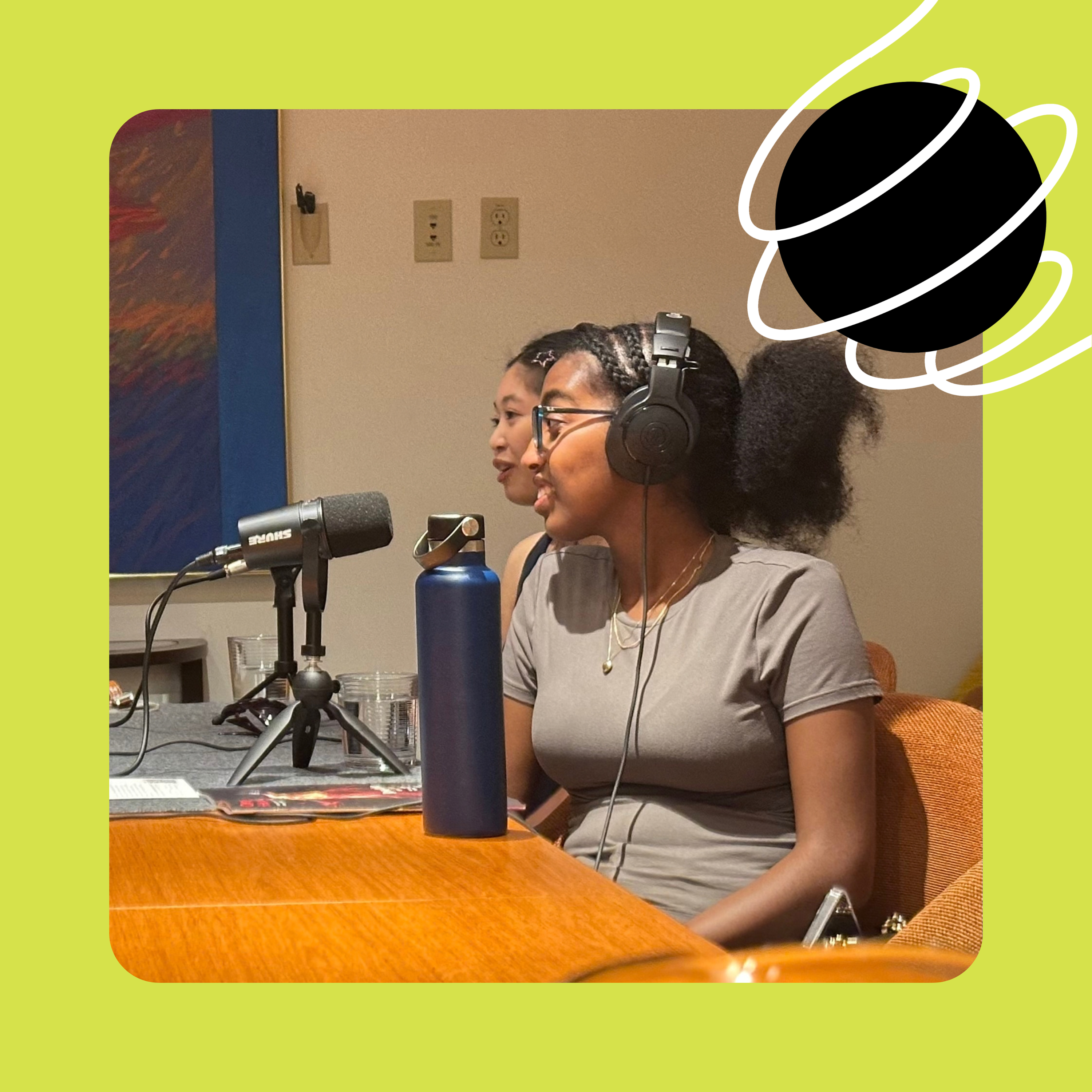
In this episode, we talk with nine students involved with Portland Workforce Alliance, a career development organization, about jobs and the future. How are young people thinking about work and employment in the face of climate change, AI, and political and economic uncertainty? We also hear from Susan Nielsen, director of Portland Workforce Alliance.
Show Notes
The young people you hear in this episode are all involved with Portland Workforce Alliance, a nonprofit organization that works with local employers to educate students about career opportunities as part of a strategy to boost Oregon’s graduation rate and build a resilient, prosperous, and well-educated workforce. Susan Nielsen is the organization's executive director.
Further Detours
- For more conversations about work, check our our episodes on labor organizing with Vanessa Veselka and Gordon Lafer, labor and literature with Lydia Kiesling, Nicholas Hengen Fox, and Jorge Herrera Caro, and work and community connection with Paul Susi.
- For more conversations with young people, revisit our episodes where we talk to kids about learning, becoming, belonging, and success.
- Find many more stories about labor in the spring 2026 issue of Oregon Humanities magazine.
Transcript
Grace: What's the biggest trigger word right now? It's a J-O-B, job
Adam Davis: J-O-B, a trigger word, and also a whole lot more than that, including potentially a sense of purpose, an identity, a source of income, and a way to be in the world, potentially. Which takes us to the question of what a J-O-B might hold in reality and in the imagination for young people on the cusp of entering the large and blurry entity called the workforce, especially today, given all the change and uncertainty related to technology, the economy, and the environment.
Questions like these are why this episode of "The Detour" is built around conversations with nine students involved with a career development organization called Portland Workforce Alliance. We also talk with PWA's director, Susan Nielsen. What are young people thinking about jobs and
the future in this moment of uncertainty about both?
Here to get us started are Jade, Tyson, and Grace
Adam Davis: When you hear the word work, what's one word that comes to your head?
Jade: I think of the word, ‘time.’ One thing about work is it consumes so much of our time and our day, and it's really the intentional use of your time to better what you're doing and fill it with work.
Grace: Hustle. If you wanna climb the ladder you gotta put that hustle in, that effort, that hard work.
Tyson: Determination. It's not easy, but a lot of it has to do with your state of mind.
Jade: My name's Jade Marotta. I went to Idaba Woods High School, and I graduated as part of the class of 2025.
And so this past year I've attended the University of Southern California and studied business there, which I discovered how much I loved it through a lot of the PWA programs I did, such as the Creative Careers program and also a Nike career day.
Grace: My name is Grace. I'm an upcoming junior at McDaniel High School, and I was part of the Creative Careers process, and that was just so fun.
Tyson: My name is Tyson, and I am a part of ORCA online school, and I am going into senior year this year. I was a part of the Oregon Force Alliance pre-apprenticeship program.
Adam Davis: So it's interesting. Grace, you said, “climb the ladder,” a couple minutes ago. What ladder? Does ladder resonate with the three of you, and what ladder are you thinking about when you think about that ladder?
Grace: For me, a ladder... To other people, they are more thinking of the corporate blue-collar work and the kind of formal, traditional way of going from the basic entry-level jobs to all the way to the senior positions, right? But sometimes our ladder could be so different. We all have different steps, and those steps could mean so many different things to us.
To be honest, it's never really linear, but it's like a stepping stone to what we wanna achieve in our job.
Jade: Yeah. Echoing off of what you said, when I think of something like what you were describing, I think of a path. But honestly, I really like looking at it as a ladder because there's kind of this intention of always progressing forward and always trying to go one step up from how you were the day before, and I think that's how you really work on self-improvement.
They say follow your own path, but I really like it as follow your own ladder.
Adam Davis: Yeah. So I-- when I think about a ladder, I think about, as you both said, going up. You're climbing towards something. What work are you climbing towards? What would the ladder of work take you towards?
Jade: I think where my mind comes from is it definitely leads to a question. I think a lot of us ask ourselves what does work mean to us?
And I think for some people, climbing that ladder and reaching the top, work becomes fulfillment. That could, for some people, mean a salary, or for some people work could result in being able to influence people, being able to make a positive change. And so I think it depends.
Adam Davis: How about for you?
Jade: I think for me, that's definitely something I've been working on, being within a climate now at school where there's definitely a culture of ... ambition and hustle and prestige within what work or career you go into. I think something that I'm working on for myself is figuring out, where does my passion lie?
When I look back on my ladder, my path, where do I hope that takes me? Thinking intentionally about the future and I hope that what I think my future now isn't what it actually is later, and I hope that I am able to change the path depending on my flexibility and what's going on in my life.
I think for me right now, it's just being able to look back and being proud of what I'm doing.
Grace: What I hope is higher up the ladder, is less of a material sense, but more of an identity. Because I am currently 16 years old, I don't know what I want materially. I feel like it's so shallow right now, and I feel like it's very temporary.
And so I'm just kinda investing in exploring what I really enjoy, what I really like, building those skills and those tools that I can use in whatever career I want. Kind of like a jack of all trades, but really it's just experiencing life and what it could provide for you in return, less than what I could provide for it.
Adam Davis: Yeah. Tyson, when you think about a ladder, what do you think it moves toward, or what do you hope it moves toward?
Tyson: Every position you have as a worker can make a difference. But I see it as more like the higher up you are, the more authority you have to make more of a difference-
Adam Davis: Huh
Tyson: or the easier it can be to make a difference.
Adam Davis: It's interesting to think about that, that work is one way we can make a difference in the world. Do you have a sense of what kind of difference you hope to make?
Tyson: Yeah. I'm going into electrical work, so I hope that I can give communities with less money more energy efficiency. That is a big thing for me.
Adam Davis: Yeah. So it's interesting to think about the link between a difference you hope to make with, let's say, communities on the receiving end of work you do, and a decision you'll make today about what you need to study, what are the technical things you need to get experience with and know.
Jade: Yeah.
Adam Davis: Can you talk about the areas you focused on through PWA or starting to focus on and why those?
Jade: So we were both part of the Creative Careers program, and it's a four-day program where each day we visited a different creative agency. And at each place, we worked with their team on a project or a workshop and really exercised those skills that it takes to be creative within that space. And one thing it really showed me is how much I really value helping people feel seen.
One thing with marketing and advertising is it's a lot about personal connection as you wanna create things that resonate with people. Just being able to meet people authentically and fully where they are is something I wanna do in my future too.
Adam Davis: One thing we haven't talked about that much is thinking about whether you're aware of changes ahead.
Do you think about big currents that are changing, or do you mostly think, "I wanna find something that's meaning..." H-how do you think about the external world as you think about your work? Jade, you're nodding. I have a feeling you might have a thought on this.
Jade: Yeah. This is something that I definitely talk a lot with my friends about, especially as we're all looking towards working in professional careers and of course, there's those big trends like the AI wave and whether or not that's gonna get rid of some of the job opportunities and placements of people.
And I think a lot of it comes down to being able to be adaptable and re-shifting our focus onto soft skills. I think one of the most important things that can shape us for the future is the way that we can make ourselves different from an AI tool. And while leaning into AI and being able to effectively use it for our productivity, I think that's something that can't replace the human aspect of us.
So I think that's something that my friends and I intend to focus on in the future. We are working on our communication and our problem-solving. That is gonna carry us further no matter what the volatility in the job market may cause. Those are strengths that we can bring forward in every step.
Adam Davis: Can I just ask, you, you referred to you and your friends talking about this stuff.
Jade: Yeah.
Adam Davis: When and where are you talking about this stuff?
Jade: All the time. I think another part is at the university I'm at and the people I spend time with. I'm in clubs that are in professional settings, and my closest friends are from those clubs. And so when we're talking about what we wanna do in our future or internships or what are we working towards, I think these are very common conversations for us. It definitely comes up because there's also some shared anxiety. I feel it's felt amongst youth a lot about this volatility when we think about our future and where we might sit within it.
And I think that as friends, we really express that to each other, and it's also a space where we're the only ones who really understand each other. Older generations aren't... they're already in the workforce, whereas we younger ones, we don't know what it's gonna look like in 10, 20 years.
Grace: I definitely agree with you, and it's so funny. All of the high schoolers I talk with, you know what's the biggest trigger word right now? It's a J-O-B, job, right? They shiver. They are frightened. The reactions are visceral. AI is insane. I actually talked with a marketing professional, and I remember asking her the same question, "How do you beat it?"
And really, it's to develop your sense of self. It's to build your identity, and it's to develop those critical thinking skills where you don't have to rely on a machine that can automate daily tasks and really things that take a no-brainer. But for the real parts, I don't think AI can ever really replace how beautiful a human's brain is.
Adam Davis: So it sounds like AI is showing up for both of you on the horizon, and maybe the horizon's getting closer. It's interesting you talked about anxiety. I love that you said what triggers anxiety. Nothing more than the J-O-B, that conversation. Do you talk with your friends about what's out there in front of you and what might hold?
Tyson: Yeah, sometimes, but I don't know if AI will start taking people's jobs because it's hard to say 'cause that's in the future. But I see people, like if AI is in a movie or if it's in some sort of art form, that people are starting to not give that the time of that day. They're starting to boycott it a little bit.
I don't think anyone wants it to take over our jobs, so I don't know if it will take over our jobs because we created AI.
Adam Davis: I wonder as you think about your own job activity in the future, whatever it may be, is there a persistent question that comes up for you?
Jade: I think a lot about security. There's always a comfort in knowing what comes next. And within work, you just don't know what's coming. And I think when it comes to creative careers in advertising, I have a constant wondering if this is where I wanna be going because I don't know how secure it's going to be.
And while this is a creative career and there's a lot of people very passionate and doing amazing work, there's also a lot of people wanting to do that work. And so it's also hard to know that it's easier to be replaced in those roles because there's such a demand to do them. And so that volatility, especially with AI and with businesses also trying to do more things like, for example, if I wanted to go in an ad agency, like businesses turning more internal for a lot of their work because they have these teams that can be more efficient with AI.
So is cutting out the jobs of some of this outsourced work, the intersection I wanna fall in? And so just not really knowing what's coming, especially as someone young who wants to shape an education around a type of work, not knowing if I am gonna make the wrong step with an education leaning so into something that may not be existent in a few years.
Adam Davis: That sounds kind of intense.
Jade: Yeah, it does sound a little intense.
Adam Davis: Is there a question for you when you think about work that comes up?
Tyson: Like she said, I would say the future, like electrical work, isn't really a job that could be taken over by AI anytime soon. But a lot of that has to do with luck, because getting into my job is pretty hard. It depends a lot on test scores, but it also depends on availability and people retiring from my job for me to get in.
Luckily at this time, there are a lot of people retiring, so there's more positions for me and my grade to get into the work, which is nice, but it's still going to be hard.
Adam Davis: Thank you. Yeah. Question for you, Grace?
Grace: Yeah. For me, it's more of my mental state related with the workforce, and it's more of will I be burnt out?
And I feel like that could definitely happen when I feel like the whole world kinda is on the weight of your shoulders. I feel like for youth the burden's really on the generation so far, because you have all of these external factors. You have, first of all, crazy enough, climate change.
Second of all, you have the crushing job force and horror stories from family members, friends being like, "I applied so much, and they did not accept me." And I was like, "Sorry to hear that." Like, who knows, you know?
Adam Davis: Could you name one or two people where you see how they are oriented towards their work and how that's affected you?
Carina: My family's my biggest influence.
Grace: I think about my mother.
Adam Davis: Anybody who's like an entrepreneur.
Carina: I would say my father. I would say both my parents.
Grace: My parents are both immigrants, right, from Vietnam.
And so I saw them value work as something very harsh on them. I kinda learned that, when you work a job and you also have a salary that's based on your hour, and it's just this clear, plain, concrete transaction, you have to be very selective with how you use that.
Aaron: That's just cool, like how you just do your own thing, don't follow the traditional route.
I really like and respect people who do that.
Jade: She's such a determined worker. She's stepped into leadership roles and just been such an inspiration for me. Just that constant seeing her hustle, grind, then also being able to take care of our family. And I think that watching her do that while growing up really channeled into my own ambition and my determination because someone that close, somebody that I love, is doing more than I could have even imagined that I would be able to do.
Ron: Definitely my mom and my grandma. The words that I could describe whenever I think of their work ethic is resilience, stability, and definitely hard work.
Tyson: My father loves doing his work. Some days he has good days, sometimes he has bad days, and you can tell. But he's also had a job that he hasn't liked doing, and I've personally seen the difference when you're doing something that you love doing for a long time.
So I've seen the difference between those two, and it's pretty big.
Hassiet: My older brother, he is in computer science or cybersecurity. Yeah, he's going into his fourth year of college. He's helped me a lot with networking and how to talk to people, and so has my dad. They're very vocal and outspoken, so that's helped me to get out of my shell.
But I would say the way that they carry themselves is a good visual aid, I would say, rather than just words and conversing to show how I should present myself.
Carina: My sister has also been a big influence. She's really dedicated. This past summer she's been working at the Cancer Institute at Providence, and I feel like that's a really inspiring thing to be working on.
Airi: My mom, my aunt, and my grandma, I feel like they've definitely given a lot of influence toward what I wanted to do or my work ethic a lot. They're very hardworking women, and they're all in the healthcare field, so that was definitely where my interest was piqued in the beginning. But I feel like just seeing them, growing up with them definitely influenced me a lot and put not pressure, but a lot of sense of self.
Lewwii: Both my parents, they've done a lot of jobs throughout their lives, and more recently they've been doing caregiver jobs. I feel like work could be, like, a type of service you could do, and giving back to people, and not just companies, but actively helping someone.
Aaron: I like people who give back to their community and stuff.
I feel like that's a big accomplishment, like, when you give back to, like, where you came from.
Hassiet: There's a lot of wisdom that comes to you as being the youngest, and so I would say they're all- all three of them would just be that influence for me.
Tyson: So I've always wanted to do a job that I actually liked doing.
Adam Davis: You're listening to The Detour. We're talking with young people about work. Here are Hassiet, Aaron, and Grace
When you hear the word work, what's a word that comes to your head?
Hassiet: Finance, Effort
Aaron: Fun
Hassiet: My name is Hassiet Kassa. I am going into my freshman year of college at the University of Oregon as a business major. I went to Rex Putnam High School.
Carina: I'm Carina Leong. I'm a senior at Cleveland High School. So far I've been really exploring the field of architecture, but at the moment I feel like I'm straying away from that because I'm not sure if it's really for me, but that's what I've been looking into the past two or three years.
Aaron: My name is Aaron Cruz. I'm a rising senior at Jefferson High School, and I'm here 'cause I was connected with the PWA Construction Mentorship Program.
Adam Davis: So I guess I’m curious, Aaron, why ‘fun?’ That's the thing that came to your mind.
Aaron: Yeah, because I believe if you work a job, it should just be something you enjoy doing.
And to be honest it shouldn't really be, "I have to go to work." It should be, "I get to go to work," because some people nowadays don't really have jobs, and it's hard to find jobs and stuff, so you know what I'm saying? Not everybody has a job, so it is a blessing to have a job,
Adam Davis: Hassiet, you were nodding at that.
Hassiet: Yeah, I agree. My parents are immigrants, so, for me, the reason why I said finance was because for most of the time that's the avenue that they had to go to, I guess. It wasn't something they did because it was fun or because they felt like they wanted to go, right? It's because they had to go to provide.
And yeah, I do agree with Aaron with the fact that it should be that way, but sometimes the reality is different.
Carina: Yeah, I think it's lucky to be able to find work sometimes, but that also means that you don't always have the privilege of choosing exactly what you're gonna be able to do to enjoy your work and your career.
Obviously, that's the ideal though, that you could choose something that you would enjoy doing and be passionate about to also be your career.
Adam Davis: How much are you thinking about work? How much is it on your mind? Aaron, can I start with you? Like, how much is work a part of what's on your mind?
Aaron: In general, I think obviously work's pretty important. You're gonna need to find work, find your purpose in life. But as of right now that's not really a focus. I just feel like focusing on school. I like to make content, stuff like that.
Adam Davis: And making content's not work?
Aaron: It is, but it's like personal work.
It's like personal development kinda.
Adam Davis: Okay.
Aaron: I'm, like, making a documentary for my senior year.
Adam Davis: Huh. About you or about things you're thinking about? Does it have a theme yet?
Aaron: I'm just documenting as much as I can of my senior year. It's fun. Doesn't really feel like work.
Adam Davis: Okay. Interesting. How much are you, Carina, thinking? Like, how much is in your head or are you feeling it?
Carina: I think I might think about work a little bit too much, honestly. The biggest focus in my life is towards the future and my future career, and I think it takes me out of the present sometimes because I'm always thinking about what choices will lead me towards a future that I'll be happy in.
And that's what motivates me to do well in school so that I can get a good job in my future. I might turn down an invite to a party where I might build on social relationships because I want to focus on a future career. And you have people asking you "Oh, you're a senior. Where are you going? What are you gonna study? What, what job do you wanna have?" And it... Because I don't have a solid answer for that, it's kind of stressful, and it's always in my mind.
Adam Davis: Hasseit, you were nodding there
Hassiet: Yeah, I agree 100%. I think I'm transitioning into making it a balance of thinking about the future, but also staying present because I realized my senior year how much I was focusing on the future, that it took me away from the present and really enjoying what was.
For example, I'd be in class doing my classwork and my homework at the same time so I could focus on other stuff when I got home, right? And I realized how out of touch I was with the lecture, like what was happening in class, that it distracted from what opportunities or, like, how much further I could learn in class than outside of it.
Adam Davis: So how do you do that? How do you be in the moment you're in, whether it's finishing up the first year of college, moving towards senior year of high school, working on what you're working on at school? How do you hold both in your head? What is it that enables you to do that?
Hassiet: What I live by is there's a time for everything.
There's a time and season for everything. And so within that, that means being able to, like I said, be present in a space that you're in and set aside time for other things like the future, whatever you're working towards.
Carina: Yeah. I think time allocation is really key to have maybe twenty percent of your time dedicated towards building on social relationships and being in the present and spending time with your friends and family.
And then maybe, I don't know, seventy percent dedicated to school and planning and work. Or figuring out what balance works for you, not necessarily those numbers, but something that helps you guide where you spend your time,
based on what you believe is important.
Adam Davis: So you're all involved with Portland Workforce Alliance in some way, and I haven't asked about that even though that's in a way what brought you to this table in this room on the eleventh floor in downtown Portland this morning.
What led you there, and what were you hoping to get from it, from your involvement with it?
Hassiet: So with the Portland Workforce Alliance, I was in the Youth Impact Council. I moved to Portland, Oregon, about two years ago now from Maryland. And so that was a huge change obviously. Oh, that's huge—East Coast to West Coast.
And within that, I was just looking for opportunities to grow, meet people and also network just because I was new and I was like, "I have a lot of free time on my hands." But I would say the Youth Impact Council allowed me to become more outspoken. I used to be very shy, and so I think within that, being able to meet new people continuously and also expand my thoughts on career and work by exploring through different career explorations that they held was really helpful.
Adam Davis: Carina, what brought you to PWA?
Carina: Yeah. I feel like the main way that I know what I wanna do or I might realize what I wanna do is kind of through exposure to different industries, and I think PWA is a great resource for exploring different career options, especially their career days. And that led me to participating in ACE, Architecture, Construction and Engineering, the mentorship program, this past school year during my junior year, which also really helped inform what I might wanna do in my future as well.
Adam Davis: Aaron, what are you thinking? How did you come to PWA? How did you get involved? What were you hoping for?
Aaron: Before I joined PWA, I kinda already had an idea of what I wanted to do. I wanted to go into electrical engineering. That's still what I wanna do.
But when I joined PWA, I was really going in looking to gain more experience and more knowledge about the trades because the mentorship program I was a part of, we were learning about all the different types of trade programs. So when I went, I was really just going with an open mind trying to learn as much as I can about those trades and see if that would be a good option for me.
And then yeah, it was a good experience. I met a lot of good people. It was really a good experience, like hands-on work and stuff like that.
Adam Davis: When you think about work, and you may have many questions, but I just want you to name one that seems to come to mind either right now or in general. A question related to work in some way
Hassiet: I guess one question I have about work is how we intertwine our purpose in life essentially with the work that we do and how that makes it impactful. I think it's easy to just go to work because we have to or because it puts food on the table or whatever reason we have in the moment.
But what everyone really wants is to be able to go to work because we want to, right? And so I guess just the balance of that, right? Knowing your purpose is one big thing in itself, but also making sure that you live that out to the fullest every day through the work that you do I think is really important.
And so yeah, I guess my question is how do we balance that and how do we do that when it's not specifically the thing that's first on our list?
Adam Davis: Thank you. Aaron, you have a question that comes to mind for you related to work?
Aaron: Yeah, I have a question for you. What do you think it means to have a good job?
Adam Davis: Can we leave that out there? Not try to answer it right now?
Aaron: All right.
Adam Davis: Carina?
Carina: Yeah, the question I thought of is just a question for myself that I don't know the answer to yet, and it's just, who do I wanna work for? Do I wanna be my own boss and be, like, an entrepreneur, or do I wanna work for somebody else?
And then in that case, who does, who is that somebody else?
Adam Davis: Oh, so I love that you named that question. I think I share that question.
Hassiet: I would ask, when do you know is the right time to move from one work or job or career, from one to the other?
Adam Davis: Yeah, that's a great question, and it's a question we're all gonna go through many times.
Carina: I had written down a quote on my little prep sheet here from Professor Grace Lordan, and it's just... She said, "One of the problems with society today is that we think that good citizens and good leaders should never change their mind." And I feel like I fell into that a little bit in the past, just because I feel like I've really wanted to maintain the illusion of consistency in my career aspirations and to be able to say, "Yeah, I've wanted to be blank since I was two," and have that consistency throughout my aspirations.
And I feel like that's really unrealistic because things that we wanna do change all the time, and especially because things in the world change what you wanna do. So I wish that for myself to be able to accept that change is part of life, and that what you wanna do can change, and that's not a bad thing.
Adam Davis: So I'm 55. I say that because I've had a lot of different jobs, and rarely did I know before getting into them what they were gonna include. Imagine yourselves at 55 and you're taking a breath and you're thinking about the work you've done. What do you want that work to feel like?
Tyson: I want to know that I made a difference.
Carina: I think one of my biggest priorities in work in the future and my career is just having a tangible impact on the world.
Grace: I wanna be able to say that I live with no regrets. I feel like 55, I wanna be financially independent.
Ron: I would definitely be in touch with my community and myself more as I explore more hobbies,
Airi: More passions. I wanna be able to look back and just know that I was, like, in... I was in my community and I gave back to my community, because I feel like that's something I have invested to do.
Grace: I feel like I definitely cannot sit in one place doing one thing for a very long time. I feel like I don't really commit for that long and I feel like being financially independent is one of the most important ways to give yourself the ease of mind, give yourself the ability to choose what you wanna do, and do what you love, and also be able to give your time back.
I feel like time is one of the most sacred things ever, so I'm like, that's what I hope to have.
Tyson: I want to be able to look back and say I provided, I installed outlets so people could plug in toasters and they could have food and stuff like that. So I wanna see that I gave people what they need to survive.
Carina: That's something I really liked about architecture, is the way that you have an impact on the world and people can go enjoy your work, and you can say, "Yeah, I worked on the new Portland Airport," and people would know what that is, and they enjoy it in their day-to-day life, and it's something that has a positive impact as well.
Lewwii: I feel like I would hope to have created an impact. Not really being known or having a legacy, but just in my head just looking back and being like, "Okay, wow." And just feeling accomplished. Not in a sense of being proud, but just feeling like I did something to help.
Jade: I think just in a place to be able to have enough kind of wisdom and guidance to give to others. So looking back when they're 19 and giving them advice about hopefully my successes, my pitfalls, and the lessons I've learned.
Aaron: I wanna be able to look back on, like, all the fun moments, all the funny moments, like, all my day one friends who I grew up with and stuff like that.
And yeah, I feel like that would just be like a good movie just to watch over again.
Hassiet: I wanna be able to say that I lived to the fullest extent. I wanna look back on the memories, right? And the good ones. I wanna be able to say that I was present enough to be in the moment, but then also at the same time work towards what I wanted to create a life that was good for me and the people I loved as well.
Adam Davis: This is The Detour. We're with young people who are thinking about what work and a career will mean for them through an organization called Portland Workforce Alliance. Here are Ron, Airi, and Lewwii.
Ron: I'm Ron. I'm 21 years old, and in a few months I'll be thesising my senior year for Reed College. And I've mostly explored the healthcare section at Portland Workforce Alliance.
Lewwii: My name's Lewwii and I'm gonna be a first year student at Western Oregon University, and I've mostly been exploring the healthcare side of PWA and I'm hopefully planning to explore that more in college as well.
Airi: My name's Airi. I'm gonna be a senior in a couple of days at McDaniel High School. In PWA, I've honestly kinda done a little bit of everything, not like a strict program at all.
Adam Davis: When you hear the word work, what word comes to mind?
Airi: Confusion.
Ron: I agree. I feel a lot of dread coming up.
Lewwii: Yeah, definitely probably just repetitive a little bit or something that makes you tired.
Adam Davis: Maybe we can talk about each of these 'cause those are all really interesting, and they feel related but also a little bit different from each other. Confusion, why that when you hear work?
Airi: I feel like there's so many options and pathways I could take, but I'm like, "I don't know what I wanna do," and it's what if I regret whatever I pursue and need to go back?
Adam Davis: When you think about what you wanna do, what are you dialing into, to answer that for yourself?
Airi: What will I enjoy? Also money 'cause it's like I wanna live comfortably. I'm not trying to be rich, but I wanna live comfortably, but it also needs to be something I can enjoy so I'm not dreading every single day that I have to get up and go to work.
Adam Davis: All right. Yeah. What pushes confusion towards dread for you?
Ron: Oof. That's a real question. So I will be graduating soon, and I've always had the idea in mind that I'd be working or I should be working a steady job and providing for not only myself but my family. And it's only been in the last few months that I realized that, hey I've set my whole identity into making money and providing for others, but what do I want?
Lewwii: I feel like a lot of times you just spend all your life or even your youth and childhood, like, answering questions of, like, when people say, "What do you wanna do when you grow up?" And you just have to have a straight picture in your head, and as you grow up, your interests or your plans may change, and some things might feel unrealistic, so it's just like what do I do from there?
Especially after high school, everything just seems so final, especially when you have to choose your major and then it's just like what if it doesn't work out? Or if like coming to regret what you do
Adam Davis: I wonder if we could go from that sense of what it might be like to what it has felt like to this point as work has filtered into your consciousness.
Have you felt rushed or like it's moving at the right pace? What's that felt like for you so far?
Airi: Honestly, I feel like it's been rushed. I know my parents are like, "Oh, you should get a job, you should get a job," but I'm like, it's also hard, and then also I have to juggle school with that, and then going into my senior year deciding how do I pick what I wanna do, but also make sure I'm taking time to myself 'cause college can be overbearing, and it can definitely be heavy. I've thought about going to healthcare, but that's a lot of school. So I don't know. I feel like it's pretty difficult so far. And I'm not even fully into the work field or really into life yet.
Adam Davis: Lewwii, what are you thinking as you hear?
Lewwii: Yeah, definitely years of building up anticipation and just people creating thoughts of what it should look like and trying especially through high school to just really build that straight path. It just builds a kind of stressful anticipation 'cause when you get there, it's confusing and you're like, "Am I behind?" Or I feel lost a little bit.
Adam Davis: If you were gonna think about work without thinking about the pressure stuff, but just thinking "What is the work that would bring me the most joy in the world or the most sense of satisfaction?" What would you think about? How would you think about it?
Lewwii: I feel like it would definitely be something where I'm helping someone. It doesn't have to be healthcare, just something that is putting smiles on multiple people's faces. I feel like if it benefits someone else, then I feel like that's when I've won.
Adam Davis: So that impact on other people
Airi: I honestly agree with that.
I feel like I find a lot of joy in helping other people and assisting. I think also just something that's a hobby to me, I feel like baking is one of those things. I think that would be something I'd wanna pursue, but healthcare pays a lot, and I want money and I can help people there, but the schooling…"
So I think definitely something that's hobby-based that can be put into a profession.
Adam Davis: I like the way you just described that. That's actually really helpful to think, "What's a thing I like to do? Can it be put into a profession?" What do you think when you think, if you try to remove that sense of pressure, what do you think about what would bring you joy or satisfaction in work?
Ron: Definitely community organizing, but I am also very passionate about cooking and having food be accessible.
Adam Davis: I keep thinking while the three of you are talking, Airi, what you said near the beginning about wanting to enjoy it and wanting to get paid for it. Do you remember what the first paying job of any kind you had might be?
First time you got paid to do work?
Airi: This past summer, I had an internship at my school garden, and that was the first time I ever fully got paid for working 'cause it was manual labor tending to the garden, besides working at the farmers market. But I enjoyed that, so that was a plus.
Adam Davis: Do you remember what it felt like to get paid?
Airi: Really good. I was like, "I'm not getting money from my family, like my mom or my dad right now." Like, "I did that. I showed up every morning, and I put in the work," so that was really enjoyable.
Ron: I think I was 17 and I was doing interpretation for judicial cases, and they had a shortage of Tagalog speakers, which is my native language.
But it felt really good to just have evidence that because of my hard work, I get paid money.
Lewwii: I think it was in June when I first started working with my brother. My parents connected me with this job 'cause I wanted to have some independence instead of just having to ask my parents for money for everything.
And so I started working with my brother kind of as a caregiver, and when I got the first check, I just felt happy. Not as in like, "Yeah, I get all this money," but, like, just "Wow." As she said, I did that, and it's just... It felt good to earn something instead of just having it given to me.
Adam Davis: Yeah. Some things we do because we just think they're fun. We just enjoy them. Some things we do because they lead to another good, like getting paid. Do you want your work to feel as fun as the unpaid things?
Airi: Yes. Yeah. I really like baking, and I feel like I was saying earlier, that'd be nice to build that into a profession, having my own bakery, but it's just fun and calming, and if I can give back to my community, yeah, I need to get paid so I can live, but I don't wanna make my treats super expensive.
No, nothing like that. I just want people to enjoy a nice treat. That's really it, so yeah.
Ron: Definitely I want to at least not feel like I'm forcing myself to get out of bed every day and show up just to get paid. I want to have life in my work, whether it's the way I treat my coworkers or seeing the results from my hard work, I want there to be a little bit of love in it,
Lewwii: yeah, I feel like going back to what they both said, I feel like if I had a job that I would really love, I feel like I would want it to not only just give back to people, but doing something that will make me happy to get up every morning and do it.
Airi: This might be, like, a weird reference, but I feel like SpongeBob.
I spent my whole childhood, like, growing up watching him, but he's so passionate about the Krusty Krab. That's how I wanna feel about work. I never wanna dread, like how Ron was saying. I don't wanna get up and feel like, "Oh my God, I have to go to work." I wanna feel like SpongeBob. He genuinely enjoys his job so much.
Adam Davis: Throughout this episode of The Detour, you've heard from students who are entering the workforce. They've been exploring their options through Portland Workforce Alliance. Here's PWA director Susan Nielsen
Susan Nielsen: I'm Susan Nielsen. I'm the executive director of Portland Workforce Alliance.
Adam Davis: So you're the executive director of Portland Workforce Alliance, and we've been talking to a bunch of, I would say young people, people still in school, about work stuff. I'm curious how, if you put yourself back to 18, 19, 20 years old, do you remember how you thought about work?
Susan Nielsen: I think I knew what I wanted to do from a very young age. When I was about seven, I wanted to be a writer, and that was my job for a good 20 years. I went into journalism and was a writer and loved it. Loved the work. And that's one of the things that drives me today is I feel like enjoying your job and looking forward to your job is something that everyone should have access to.
Not that every day is going to be the best day of your life, but that you really believe in what you're doing and you like the work environment that you're in. And so helping as many students as possible find what that is for themselves, whether that's electrician or nurse or graphic designer or astrophysicist or what have you. Helping them identify that for themselves and understand how to get started on that path is what really drives me for this work.
Adam Davis: Do you remember when you were seven and you wanted to be a writer, or you knew you wanted to be a writer? What did you know? What did you want from that?
Susan Nielsen: I just thought there was nothing more beautiful than being able to see your ideas take shape. I thought just the act of writing and communicating is a beautiful thing, and then layer journalism on that, figuring out how to learn what's happening in your community and being able to share that with others and understand it for yourself.
I found that very enjoyable and very interesting and very hard in a enjoyable sort of way. And so that was a really good career path for me. It wouldn't be a good career path for every person, but I really enjoyed that. But even at seven or seventeen, you still have a vague sense of what you wanna do, but it's hard to know.
Even with a lot of resources or support at home and positive role models and everything else, it's hard to figure out for yourself what the right fit is for you and how to get started.
Adam Davis: And how long have you been at Portland Workforce Alliance?
Susan Nielsen: About ten years, eleven years.
Adam Davis: What's it like?
Susan Nielsen: I really love it. I love the work, and I think the thing about the organization, it's very volunteer-driven. It's people from high schools, employers, colleges, training centers coming together to create experiences for students to take some of their aspirations for a test drive to develop some skills, develop some early relationships, and just figure out the amazing diversity of jobs that are here, right here in the region many of which pay really well enough to support yourself, enough to support your family.
Even though people come from a lot of different backgrounds, and they're at different points in their career, the organization just believes in helping students identify that for themselves. And we do that because we really see that access to career development not as an extra, but really a matter of social and economic justice for students.
Adam Davis: You said a minute ago, I think, take your aspirations for a test drive.
Susan Nielsen: Right.
Adam Davis: How do you do that?
Susan Nielsen: We have a lot of different programs. Some are like a one-day community event, like our Northwest Youth Careers Expo. Some are multi-month mentorship programs. Either way, students might come into a career day or a mentorship. Maybe they've always thought they would enjoy being a nurse, for example.
And then by the chance of exploring, they realize, yes I really do wanna be a nurse. This is exactly the thing. Or they realize, I like the idea of being a nurse, but I don't actually like to be around sick people or blood. That's an important thing to figure out before you take on a lot of college debt.
Or maybe they think, "Oh, actually, I want to go into medicine and be a doctor, or actually radiation tech, or actually CNA," or, "I can see how I get started to be a nurse," so it's not nursing or bust. Maybe you start out as a caregiver or a CNA and work your way towards being a nurse or starting as an EMT.
And so helping students develop kind of a plan A, B, and C. So it's just as important to figure out what you don't wanna do as what you do wanna do. There's so many choices, it can be overwhelming. So helping students understand that is important. Maybe a certain path is not for them. But others may open up. This is what is for me, or this kind of work is what's for me, knowing that they are likely to change jobs many times. They are likely to change entire industries a couple of times. But understanding the kind of work that you wanna do, the kind of environments you wanna be in, the kinds of problems you like to solve, and how that intersects with your values and your priorities is a lot of the work we're doing, versus what job title do you want.
It's like, what kind of life do you want to live? And that's what we hear from students. That's what they're really interested in and struggling with, is they want their work to reflect who they are.
Adam Davis: I love that. I love that approach. I'm curious. You said ten or eleven years at PWA for you.
The world, it's been quite a ten or eleven years, and I guess I wonder, have you detected changes in how the young people that are coming to PWA think about the lives and the work ahead of them?
Susan Nielsen: I think one constant throughout generations is people needing support as they figure out what kind of job they want to do.
That's something that you and I needed when we were in high school. The number of volunteers who come to us and say, "I wish I'd had something like this when I was in high school." I hear that every single day, right? "I wish I'd had something like this in high school where I could have explored some of these things and figured this out earlier, figured out that earlier."
I think something that's different now, there's a new layer of economic uncertainty where students, maybe because of AI, maybe because of the political climate, they're not certain what jobs are going to be there for them a year from now, five years from now. And as adults, we're not entirely sure either.
And so there's maybe a little more economic and industry uncertainty than there was 10 years ago. And layered on top of that is a little bit of climate anxiety you see with students. For the most part, they're quite aware that our climate is changing, and that's adding a certain amount of anxiety as what is the world itself going to look like a generation from now?
And so I feel like it's that much more important for students to be able to connect to ways that they can have an impact, things that they can do, ways they can be useful, ways they can continue to learn and just develop those skills and confidence and understand "I am needed in this world. This is how I can contribute. This is how I can make a difference." Even when there's a lot of things that are outside of their control, there are things that they and we can control, which is how can you keep learning? How can you find a career that is meaningful to you? And so I think those extra layers of uncertainty just add that much more momentum and importance to the work.
Adam Davis: And really, I heard you name three kinds of uncertainty that seem to be increasing. One is about the job market itself. One is related to climate, and one is related to AI.
Susan Nielsen: Right.
Adam Davis: And I guess I wonder, are you finding it affecting the work you all do at PWA or the way students are working with you?
Susan Nielsen: I think probably we have, and I see kind of that love-hate relationship with it. I think that's one thing that we're continuing to learn is not to rely on it, not to villainize it, but to see it as a tool, and then also make sure that we are folding that into our career learning. Like, for students to see, here's how AI is being used in different sectors.
And then also here's how not to use it, not to use it as a shortcut for your own creativity, your own thought process. And so helping students navigate that a little bit.
Adam Davis: The last two things I'll ask you are things that the students who we've talked with have been responding to, and one is, what's a word that comes to your head when you hear the word work?
Susan Nielsen: Honestly, the word that comes to mind is joy And the reason for that is my, my parents had two different, very different jobs. My dad was an accountant, my mom was a musician. But they were both very proud of the work that they did, and they both conveyed without telling us, but showing us "Whatever you do, try to do it to the best of your ability, and try to do work that you're proud of."
And I think when you do that, there's a lot of joy that comes in doing a job well and making a difference at the end of the day. And so to me, that's what we strive for. You know, we're not gonna get there every day. And, I've had a 30-year career. There's maybe only three or four months of that career when I didn't like the work that I was doing or didn't feel good about my work environment or what have you.
Those were some long months, right? But I learned a lot from those times. You learn a lot by working in suboptimal work environments and realizing "Okay, not this," or learning how to advocate for yourself. "If I don't like this, here's how I can find something that is a good fit." So I feel like that's all part of the process, and that's one thing we try to convey to students, learn from every single job that you have.
Starting with babysitting or mowing lawns or helping out a neighbor. It's all part of the process.
Adam Davis: Yeah. That, "Okay, not this," is incredibly important. And it shows up in lots of ways. Last thing I wanna ask is whether you have a question, a sort of either right now or persistently related to work or what you're hearing the young people talk about.
Susan Nielsen: I really liked what Carina had to say about who you're working for, and I feel like we don't talk about that enough as a society. It's a lot, "What do you wanna do?" It's the label or a LinkedIn title or what have you. But who are you working for? Maybe it's yourself, it's an employer who is the, who is your client?
That makes a huge difference in your job satisfaction and the difference you're able to make. And so thinking is a little bit about the what, but just as much about the who and the why, I feel like is a really important part of career exploration. And honestly, we learn from students. We learn so much from students like the students you've been talking to on this podcast.
We learn so much just by getting out of the way and listening to them.
Adam Davis: Yeah. I wanna say thank you again for connecting with students and doing the work you're doing with so many people, and for introducing the nine students that are coming in to do this. It has been a real pleasure, and just deeply grateful for both parts of that work that you're doing, so thank you.
Susan Nielsen: Oh, we're grateful as well. Thank you.
Aaron: Thanks for listening to The Detour from Oregon Humanities.
Adam Davis: A big thank you to Grace, Jade, Tyson, Hassiet, Carina, Aaron, Airi, Lewwii, Ron, and Susan. You can learn more about Portland Workforce Alliance at portlandworkforcealliance.org. Anna McClain is our producer. Ally Silvester, Karina Briski, and Ben Waterhouse are our assistant producers.
Our transcript is by Tom Williams. This is Adam Davis. See you next time
Airi: My teacher says she listens to this. My cooking teacher, so-
Airi: She, we know one person. Give her a shout out.
Lewwii: Give her a shout out.
Grace: Yeah.
Airi: Can I? Hi, Kelsey. Shout out to you. I hope you enjoyed the podcast. Yes.