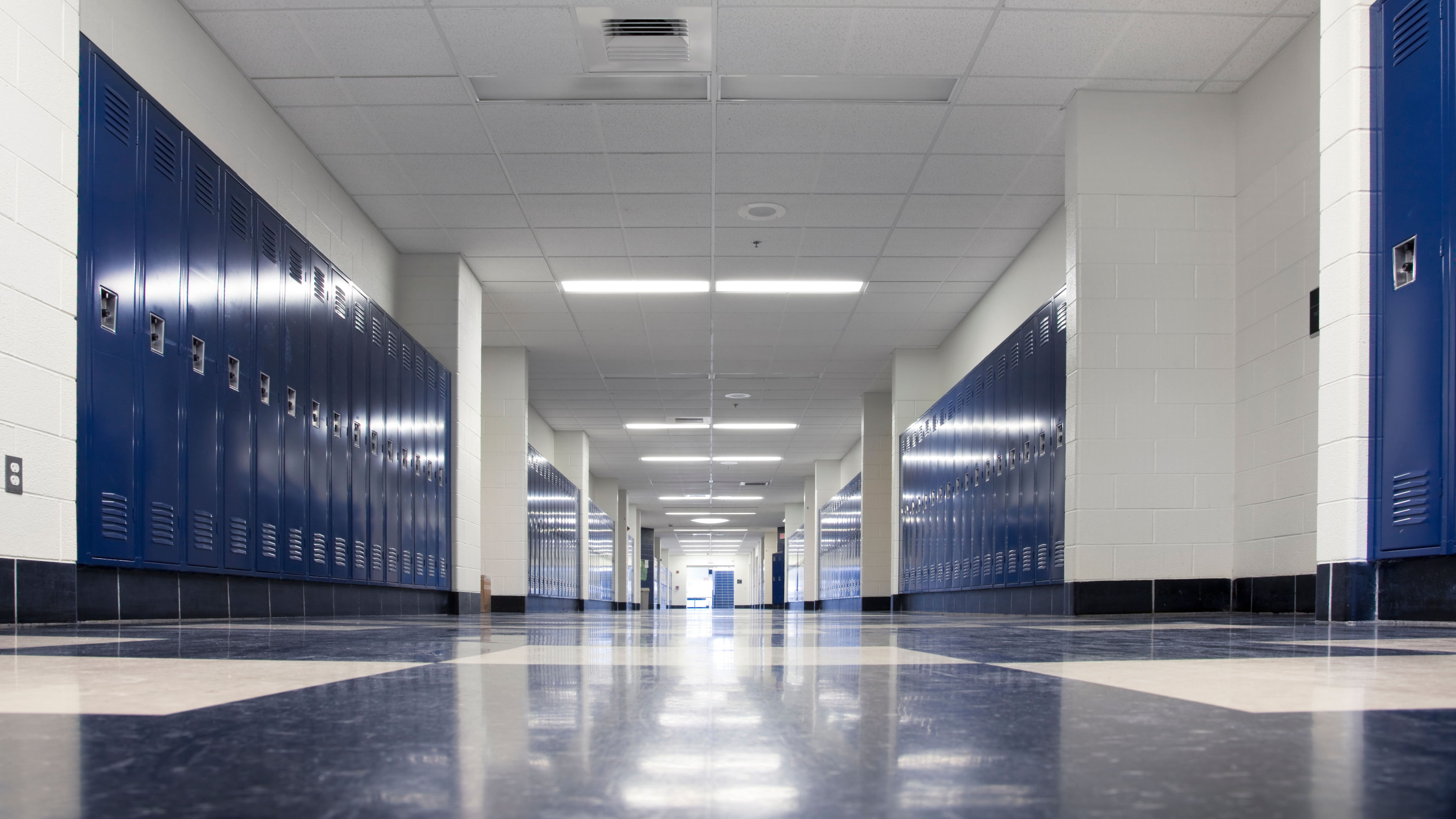
I was not a particularly good high school student by any of the usual metrics. I struggled with turning assignments in on time, sometimes skipped classes to walk to nearby fast-food restaurants with my friends, and spent class periods staring out the window and daydreaming. I often found high school alienating, a place where I did not fully belong.
Despite this, I loved learning. I grew up to become a writer and an English teacher, eventually working in the same Beaverton district that I graduated from, hoping to rewrite the story of my relationship to schooling.
As a freshman in high school, I once sat on a panel during Black History Month, sharing painful experiences in front of a room full of teachers and administrators. My peers and I spoke about the ways we had been made to feel invisible in classrooms and cafeterias, in hallways, and on school buses. At the time, it felt like an honor to have the ears of adults, who listened attentively and took notes.
Ten years later, I organized a similar panel with my Black students as a professional development opportunity for a primarily White teaching audience. This time, I was wrecked by guilt. It felt like the only way to get my colleagues to understand the realities of racism was to have my students share their traumas at the altar of White indifference. Some of my colleagues commended my students for their courage. But I didn’t want them to have to be brave. “I just want to be a student,” the Black Student Union president, a senior at the time, said to me the next morning. She articulated all I had ever wanted for myself, and, in the absence of that luxury, what I hoped to make possible for my students. I left the district that same year—how could I shield my students from the cruelty of a system that did not spare me?
In the recent history of the Beaverton School District, two inciting incidents, only a few years apart, have plunged the district into crisis, revealing tensions that had long been hidden. In both cases, a flag is raised, and where one flag is met with quiet acceptance, the other is framed as a disruption. Together, they expose a troubling pattern of institutional cowardice, signaling which students are seen as worthy of protection and which students constitute a demographic threat whose speech and actions must be policed.
In November 2023, the district held a listening session at a local mosque. It was one month into the genocide in Gaza, and tens of thousands of Palestinians had been killed. Large swaths of Gaza had been destroyed and reduced to rubble. Thousands of miles away, Beaverton students, families, and staff, directly impacted by the conflict through heritage, history, or their own sense of humanity, were wrecked by the devastation that was unfolding.
Although I was no longer employed by the district, I was invited to attend the session as a community member who had traveled to and taught in Palestine, and share some opening remarks. “We offer the testimonies of our children in the hope that you will see them and be moved to action on their behalf,” I began, before inviting the line of students up to speak. A sophomore at Westview High School wept as she described her inability to focus in class; all she could think about were the students her age who had been killed.
A Palestinian middle schooler shared the names of family members who had been killed in the recent escalation of violence and said she didn’t understand why none of her teachers were talking about what was happening. “Isn’t school where we are supposed to learn about the world?”
“What will you do to keep our children safe?” a parent asked.
While district officials expressed sympathy and offered unspecific comments about the political state of the world, only one panelist, a school board member named Tammy Carpenter, dared to say the word Palestine out loud. She called for an end to the occupation and the siege on Gaza. Her plain speech was a welcome relief from the others’ opacity.
At the end of the session, I greeted some of the youth I recognized and listened as they reflected on what they’d just experienced. One student said: “They couldn’t even say Palestine. It’s like we don’t even exist.” Some attendees expressed frustration. How many listening sessions would the district hold before taking action?
Later that month, members of the Indigenous Student Affinity Club painted a mural honoring Native American Heritage Month in math teacher Hailey DeMarre’s classroom. The mural featured a Pride flag, an Ojibwe flower, and a Palestinian flag. Within days, DeMarre received word from the administration that the students had not followed protocol for modifying school property, and the mural would be removed. She followed up by explicitly asking if the Palestinian flag was the issue, which principal Andrew Kearl denied. She noted that other student murals had never faced such scrutiny.
DeMarre took to social media to condemn the decision: “Beaverton, you cannot take the voices of my students away by painting over it.” An online storm followed, and the repainting was postponed pending a district investigation, which found that the flag was “polarizing, threatening, and antisemitic.” DeMarre also faced threats from parents. One even evoked her status as a mandatory reporter and suggested she was obligated to take action. Mandatory reporters are legally required to report instances of child abuse or neglect. The presence of a Palestinian flag in a classroom constitutes neither.
On a Monday afternoon in December, the mural was painted over. In an email to staff, Principal Kearl wrote that the presence of the flag made students feel unwelcome and unsafe and interfered with their ability to learn. He emphasized the decision was procedural and not political, a distinction that mattered very little to the students and families whose identities had been deemed unsafe.
Now in DeMarre’s classroom, where there was once a Palestinian flag, there was only a stark white wall—and half a world away, there were no more functioning schools in all of Gaza.
In the English classroom, students are taught to uncover both the literal and symbolic meanings of a text. They are taught to identify subtext—what is implied but left unsaid. To the sole Palestinian teacher in the building, who chose not to be identified by name in this story, the subtext was clear: the district’s promises rang hollow, an echo against the newly painted wall. She had initially approached Bianca Bebb, Beaverton High School’s assistant principal, at the onset of the genocide. She wanted to know how the school and district were going to support Muslim and Arab students. “We have a big population of students from that part of the world who are worried about their grandmas and their uncles and their aunts and their cousins and their friends.” She said she broke down crying in Bebb’s office. “Don’t you have kids?” she recalled asking. “Are you not a mother? Does what is happening not break your heart?” Bebb told her she would speak with the principal about her concerns.
The following week, the principal’s all-staff email included a note acknowledging that there were staff and students from the region that were affected by what was happening. The Palestinian teacher said the language was “sterile” and “dismissive.” It minimized the weight of the daily horrors she carried with her. “They never say Palestine,” she said. “They never say Palestinian. They never say Gaza. They never say genocide.”
By this time, the death toll in Gaza was exorbitant. She was glued to the news even as it broke her heart. She went to sleep crying and woke up crying. She cried between classes. Sometimes she had to sit in the office because she was too distraught to teach. Bebb sent her an email letting her know she could take time off if needed and included a list of district resources. She recalled her response: “I don’t need your resources. I need you to acknowledge that there is a genocide happening and no one is saying anything.”
The Beaverton School District is made up of over 40,000 students and over 4,500 staff members across 54 schools who speak more than 100 languages. Their promise is laid out on their website in bold yellow and black typeface: “Belong, Achieve, Believe.” They want all students to feel “accepted, supported and encouraged to be their authentic selves.” They envision every student saying: “I belong, and I matter.”
The language and vision is powerful. The use of pathos is exemplary. But as I used to ask my students: where is the evidence that substantiates these claims?
In June of 2020, as the country erupted in protests after the brutal murder of George Floyd by a Minneapolis police officer, Beaverton families and community members held their own marches. The summer of nationwide protests prompted an examination of the ways that institutions, including schools, were complicit in upholding racism. The district released a statement and every readerboard in the district said BLACK LIVES MATTER through the end of that summer.
That fall, Aloha High School, one of six in the district, made local headlines after students and staff complained about a Blue Lives Matter flag displayed in the office of Deputy Dylan Leach, the school's armed on-campus officer. Many students, particularly students of color, were upset by the sight of the flag and what it represented. Some saw it as a repudiation of the Black Lives Matter movement. Other students saw the flag and thought of ICE. Katherine Watkins, a former Beaverton School District teacher who, years later, won a settlement in a racial discrimination suit against the district, raised these student concerns to then-principal Matthew Casteel, but to no avail. When she elevated the issue to Don Grotting, then-superintendent, he cited free speech laws.
In response to the controversy, the district released another statement, saying they did “not have a policy about office decor or displays. Further, the district follows the law and case law regarding the First Amendment to the United States Constitution… that protects freedom of speech, freedom of religion, freedom of assembly, freedom of the press, and right to petition as it pertains to a public workplace, and have chosen to deploy a limited, viewpoint-neutral lens when evaluating concerns regarding such displays.” Weeks later, Deputy Leach voluntarily removed the flag from his office. Had he chosen not to, it is not a reach to assume that it might hang there to this day.
The Blue Lives Matter flag has garnered so much controversy that it has even been banned by some police departments in the United States. Many think of it as a dog whistle. Yet the district hedged, calling the display a matter of staff discretion. Where was that same discretion a few years later, when the Palestinian flag painted by students was removed from Ms. DeMarre’s classroom?
As the 2024–25 school year began, Beaverton School District remained silent on Palestine even as the global tide was turning. Across the world, people were marching and waving the Palestinian flag and condemning the failure of international law. Israel’s waning public favor brought with it a sharp increase in repression and censorship of pro-Palestine related speech and actions across the country. The district was no exception; a high school junior wearing a sweater that depicted a watermelon, a symbol associated with Palestine, was pulled out of class and asked by the principal if her shirt was meant to be a threat.
Another Palestinian teacher in the district told me that she had come to hate the word symbol. “I don’t know how to interpret it. Does a flag not represent a people? And are those people not human beings?”
Students and families in my community have told me that, in several instances, the situation has gone beyond heated email exchanges and school board meetings, and become violent, like when a Palestinian family was harassed by Zionists at an elementary school fair celebrating cultural diversity and heritage. They were called terrorists, and their pictures were circulated on right-wing websites. The father, who I spoke to shortly after the incident, said he was heartbroken when his daughter said she never wanted to go to school again. Each time families have asked what recourse there is for the Palestinian and Muslim students whose voices have been silenced, the district points to a “bias-incident hotline,” which one school board member called “a complaint line for White people.” The families most targeted by Islamophobia know these tools are not a reliable avenue for recourse. Their own existence as Palestinians and Muslims is treated as a threat to Jewish safety, a local echo of the logic that underwrites genocide itself: to erase the people is to erase the problem.
Meanwhile, the political and ideological debate between adults has overshadowed the voices of Muslim and Arab students. A December 2024 school board business meeting featured the testimonies of several Muslim and Arab students, who spoke to a pattern of discrimination and double standards.
One young woman, wearing a keffiyeh, cited the district’s anti-discrimination policy and accused the district of failing to achieve its stated equity mission. Another student shared an experience of having her hijab forcibly removed from her head. The final speaker historicized the recent wave of Islamophobia and drew connections to the post-9/11 environment. “Our students and…teachers are afraid to voice an opinion. We give ourselves awards and pretend like everything is fine… but we’re not… Our schools fly Israeli and American flags but there’s never a Kurdish or Palestinian flag. We prop up the oppressors who boast about the cruelty they’ve enacted. It has made me ashamed of this administration…”
This past spring, I spoke with several students to ask about their experiences during the last two years of the genocide and what, if any, support they had received from the district. Sara, a senior from Westview High School who has chosen to go by a pseudonym, said that students were repeatedly told by the district’s equity coordinator that they would create spaces for Muslim and Arab students who were affected by the war to process and reflect. But it never happened. “You hear the news in the morning and then you have to rush out the door and go to class. If [they] won’t talk to us about what’s happening the least [they] can do is give us a space where we can talk to each other.”
She described an incident where she was sharing her views with a favorite teacher, who surprised her when he asked: “So you support Hamas terrorists?”
Another student said it was a relief to be able to speak openly about Palestine at Black Student Union meetings. “I’m not Palestinian, but I understand racism and can recognize it when I see it. All these issues intersect.”
Yet another student said she was asked if she wanted to participate in a dialogue between pro-Isreali and pro-Palestinian students to sit together and hear each other’s perspectives. “This is not Jubilee,” she said, referencing the media company that platforms some of the biggest debates in the digital age. Every time she walked into a classroom she would wonder: “Am I a person to you or not?”
Sara suspects, now that leading human rights organizations, including the United Nations, have declared what is happening in Gaza a genocide, that teachers and school officials might be more willing to speak up. “It’s like they were waiting for permission to say what we could clearly see. They should lead if they want us to grow up to be leaders.”
In response to the district’s inaction, Muslim and Arab students formed an inter-MSA, an alliance of Muslim Student Associations from each district high school, last October. “The MSA gave us a safe space to be Muslim together… We wanted to bring the community together,” one student told me. They created space for prayer, grief, joy, and laughter as they hosted cross-district game nights, Ramadan iftars, and cultural activities. They wanted a space where they did not have to defend their identities or their beliefs, where they could show up in ways they felt they no longer could in their respective schools.
Many of the students who started the inter-MSA are seniors. They had this advice for incoming students: “Don’t be scared to tell the truth. It’s easier if we all tell it together.”
When asked what they wanted to share with teachers, one student said she used every assignment as a platform to talk about Palestine: “Your silence made the issue bigger. Because you avoided talking about Palestine at all costs, I have had to become a teacher.”
For the Beaverton School District, the distance between intent and impact is a faultline, threatening to collapse the district’s credibility at a critical inflection point for the future of public education. Beaverton has become a microcosm of the national crackdown on pro-Palestinian voices. Across the country, politicians hold congressional hearings and fire university presidents over allegations of antisemitism, while pro-Palestine activists are detained for calling the war a genocide. Workers are fired over tweets, and teachers who say their Palestinian students’ lives matter are doxxed and hounded into silence. In Beaverton, school board members label solidarity as “bias.” Any criticism of Israel has been conflated with antisemitism. Like all third rails, the jolt of addressing the truth is destabilizing, yet only in the flash of the current can the district actually see and hear what has been relegated to the dark: the unheard grief of its Palestinian, Arab, and Muslim students.
A few weeks after the Palestinian flag had been painted over in Hailey DeMarre’s classroom, I sat with a student from the high school at the mosque as she expressed her frustration: “The flag has always been a form of resistance in Palestine, where it is restricted under Israeli law. It has always been a way to say ‘we are here.’ When they make us put down the flag here in America, here in our classrooms, where we should be able to celebrate where we are from, it really hurts.”
One of the most important lessons I wanted to impart on my English students was that revision was just as important a skill as writing. I had hoped that life would mirror art, that the lessons that were meant to make them better writers would make them better people, too. The first draft of a story sometimes bears little relation to its final version. Revision is where we take risks, solve problems, and excise inconsistencies. It is where we contour the complicated and messy edges of the narrative at hand, and where we ask ourselves hard questions about what we’ve omitted from the record. It is difficult but important work. We cannot expect our students to be brave enough to do what we ourselves are unwilling.
Is the district’s equity promise simply a rhetorical device—a work of fiction that should be valued for its form and not its function? The electric shock of the third rail has illuminated the distance between rhetoric and reality, and now the district must decide whether it will continue to redact the truth or rewrite its relationship to the youth it has betrayed—so that every student’s story can finally be told in full, and so that every student can finally say, without qualms, that they belong and that they matter.
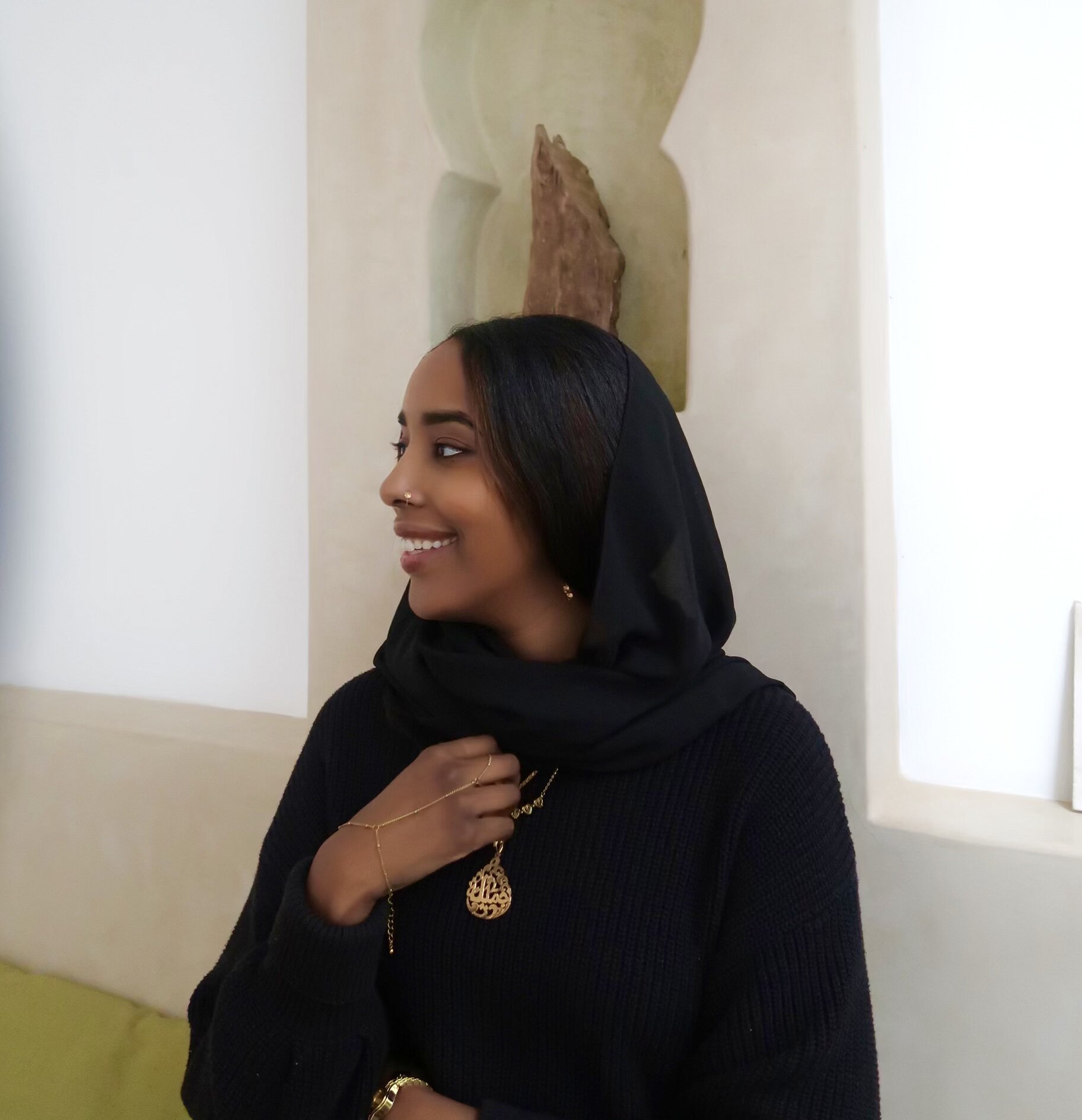
Jamila Osman is a Somali writer, multimedia artist, and educator. She has taught creative writing from Portland to Palestine, from summer camps to juvenile detention facilities, and holds an MFA from the University of Iowa’s Nonfiction Writing Program, where she was an Iowa Arts Fellow. Her work has appeared in numerous literary journals, magazines, and anthologies. She is the author of the chapbook A Girl is a Sovereign State (Akashic, 2020) and is a 2025 Oregon Humanities Community Storytelling Fellow
Comments
No comments yet.
Add a Comment