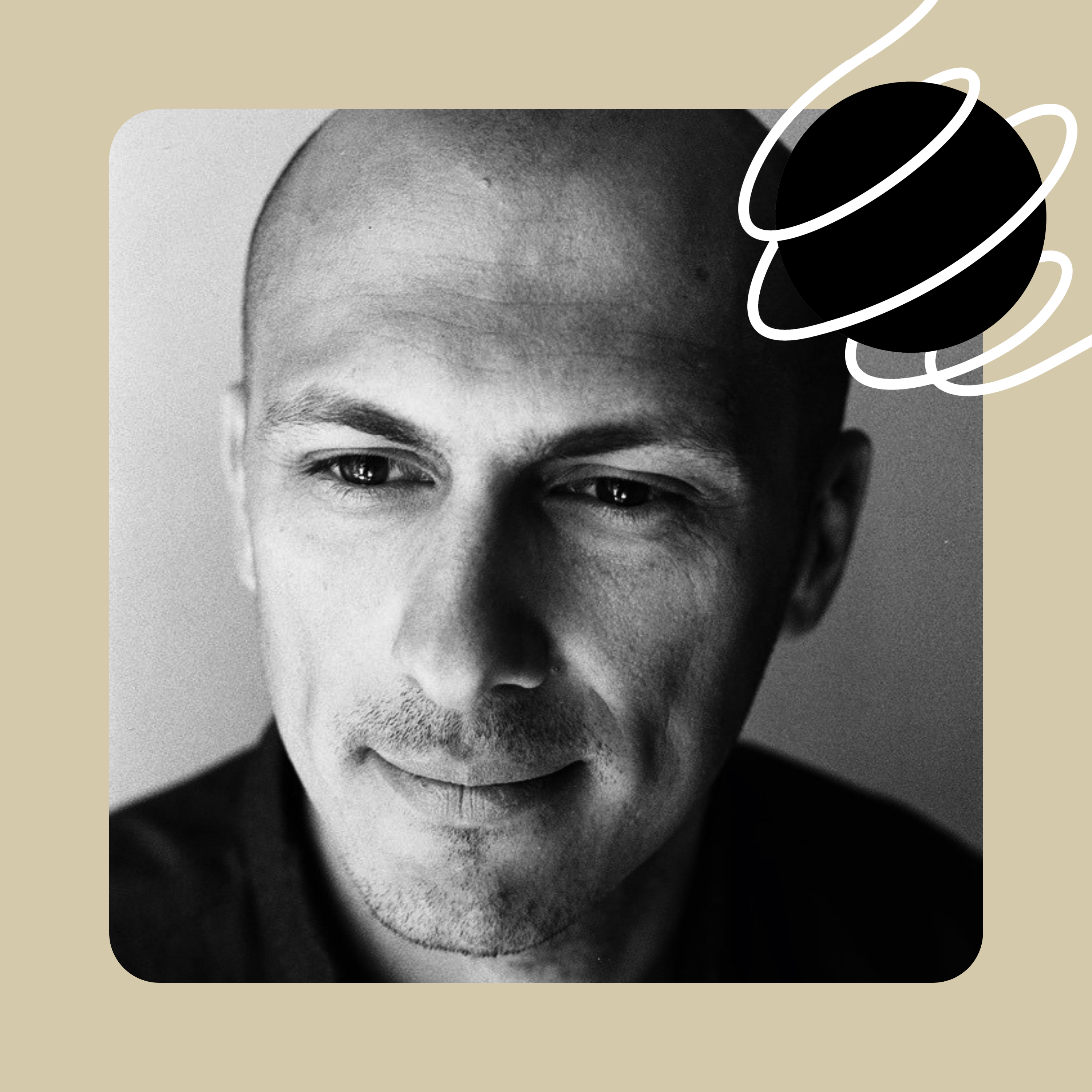
In 2022, on the day before Russia invaded Ukraine, Aleksander Chernousov left Russia for Oregon. He was headed here to study Russian-speaking communities in the Pacific Northwest through the University of Oregon. (Russian is the fourth most common language in Oregon.) Aleks didn't know then that Oregon would become his long-term home. Since getting here, Aleks has talked to hundreds of people from Russia, Ukraine, Belarus, Kazakhstan, and other Russian-speaking countries about their departures, their reasons for coming here, and especially their experiences in this part of the world. From recent Ukrainian and earlier Soviet refugees to an insulated sect of Russian Orthodox Christians called Old Believers or starovery, these varied stories are steeped in religion, war, family, geography, art and work.
Show Notes
Aleksandr Chernousov is a theater director and storyteller, serving as a courtesy researcher in the Russian, East European, and Eurasian Studies department at the University of Oregon. He has received several grants, including a Fulbright Grant, an Andy Warhol Foundation grant through PICA, a Beaverton Small Art Grant, an RACC Arts3C grant, and an Oregon Arts Commission grant. He dedicates significant time to volunteering with Oregon's immigrant community. Drawing on his background in theater and film direction, Aleksandr has combined his writing skills with twelve years of visual storytelling and performance experience, seamlessly merging his two passions. He currently calls Oregon home.
Chernousov has written two pieces for Oregon Humanities: "Speaking in Tongues," about language and violence, and "One of Them," about identity and conflict in Oregon's Slavic community.
The author Chernousov mentions as a "Russian version of Dr. Seuss is Korney Chukovskey.
Read more about Oregon's Slavic communities in Susan Hardwick's essay "Far From Home."
Transcript
Adam Davis: In 2022, on the day before Russia invaded Ukraine, Aleksander Chernousov left Russia for Oregon. It turns out that this path from Russia or other Russian-speaking countries to Oregon is well-worn. Russian appears to be the fourth most spoken language in Oregon and in Multnomah County, and this was what motivated Aleks’ trip. He was headed here to study Russian-speaking communities in the Pacific Northwest through the University of Oregon.
Aleks didn't know then that Russia would invade Ukraine the day after his departure, or that Oregon would become his long-term home. He didn't know that both what he was headed here to research and the language he was planning to research it in would quickly become much more vexed and complicated than he had assumed.
Since getting here, Aleks has talked to hundreds of people from Russia, Ukraine, Belarus, Kazakhstan, and other Russian-speaking countries about their departures, their reasons for coming here, and especially their experiences in this part of the world. From recent Ukrainian and earlier Soviet refugees to an insulated sect of Russian Orthodox Christians called Old Believers or starovery, these varied stories are steeped in religion, war, family, geography, art and work. How they tell these stories and whether they tell them at all has been steeped in their sense of who Aleks, the person they're talking with, might be.
It turns out that Aleks is not only a curious and patient listener. He's also full of stories and reflections that do a great deal to get us thinking about moving between countries and languages as we try day by day and year by year to be at home where we are.
This conversation with Aleks happened in late August, 2025, in the XRAY FM studio in North Portland. It's worth noting that this conversation took place not in Russian, but in English, and this is what we started with: what it feels like for Aleks to engage in this and so many other conversations in English in a country that was not, but is becoming, his home.
Well, thanks Aleks for joining us here in the basement at XRAY. And I guess I wanted to start by asking you, since we're going to be talking a good bit about Russian-speaking communities in Oregon, I wanted to start by asking what it feels like to start a conversation or an interview in English
Aleksandr Chernousov: Well first, thanks for having me. I mean, it's always horrifying to speak in another language other than your native one. Because, you know, at first when I came here and I had to, you know, speak English, it was like a kind of horror grows up in me. And I try to avoid it with any, you know, possible reasons that I could come up with.
And still, it is troubling for me to speak English because when I came here, I mean to Oregon, I had this project of researching Russian-speaking communities, and I thought that's not a big deal. I would be dealing just with the Russian-speaking people and I don't need a lot of English. I have some.
But actually there was a lot of coincidence because, when I came here, I felt a little bit like, I felt kind of mute, because it was when the war started, you know.
Adam Davis: In 2022.
Aleksandr Chernousov: Yeah, in 2022. And it was like the day I came here, the war started, and was like a pretty nasty incident. Nobody wants to speak Russian. I guess even I don't want to speak Russian, because I was confused about what is happening and how long it will be. So I realized that I need to speak English, you know, unless it's gonna be mute for a long time. Because I want to share my thoughts and I want to share my feelings and emotions, and I want to speak to people who are around me.
That's why, you know, I need more English. And that's how I realized I'll actually think differently. I mean, Russian-speaking people, think in much longer sentences, you know, like Dostoevsky did. And not how like local people like Americans do. [American English] is much shorter and it's like a metaphorical and idiomatic language, which I like a lot.
And actually I grew a lot of love for it. I mean this idiomatic piece of it.
Adam Davis: Well, can I ask you, you said you didn't want to speak Russian and other people also didn't want to speak Russian. Why not? I understand that the war started, but can you say more about why you didn't want to speak Russian?
Aleksandr Chernousov: Yeah, actually I remember this exact day when I heard it for the first time.
It was March 5th, 2022 and the person who I was speaking to, it started with like, “good day,” like dobry den in Russian, and he said to me, "It couldn't be a good day because you know, bombs have fallen. And if it is a good day for you and me, it is definitely not a good day for people who are dying in Ukraine."
And then I realized it's kind of tricky, I mean, even in personal conversation, to use Russian. So I started to write in English on my social media, and a lot of my friends started to do the same thing. They just started to write in English. Even though it was just casual posts.
Adam Davis: Without explaining why or people just made the change and it was understood? That's a pretty radical change.
Aleksandr Chernousov: Yeah. As for me, I started to do it without explaining because if you start to explain that, you actually break some Russian laws. From that time, when the war started, you just cannot say it is a war. That is actually a small reason why I started to use English because Russian has so many words, they start to feel and seem so different. And they just have a different context and even the words from our beloved and favorite Russian writers like Dostoevsky and Pushkin or something like that.
There was a special campaign in Russia. Whose side will be like Pushkin and Dostoevsky if they will live in our time? And I mean, the goal of this campaign was to make sure that people understand that Pushkin and Dostoevsky will be on the Putin side. I mean, they even found proof of that.
Adam Davis: They did some careful literary reading.
Aleksandr Chernousov: Or where, yeah, they just, you know, they just select some places about like a Russian spirit and how Russians should feel themselves. So, it was a totally wicked thing. So for me it was pretty hard to speak Russian and write in Russian, because you will need like a ton of pages to explain why. It would be easier just to cut it off.
Adam Davis: So you came here in 2022 knowing that you were going to research Russian speaking communities in Oregon?
Aleksandr Chernousov: Yeah.
Adam Davis: Then you realized you were not comfortable speaking Russian and that possibly many of the people you were going to be speaking with were also not comfortable speaking in Russian. Is that an accurate characterization of what happened three years ago?
Aleksandr Chernousov: Yeah, it sounds kind of absurd because you know, before that, I mean, Russian-speaking communities here, they're not all Russians. I would say maybe 60 percent of them are not Russians. They're not even Slavic. I mean, because there is some, you know, business about that. How should we call them? Because after the war [started], to call them a Russian-speaking community, it's not correct. because some of them actually use three or four languages at home. Like for example, Ukrainian or Kyrgyz or something like that. But they do use Russian because it's easier, and it's because most of them were from Eastern European countries like Romania or Poland, and they had to learn Russian in their schools. So it was also the colonial thing, and here it would be easier, you know, to use the Russian language in communication and when you know people. Here you ask, “where are you from?” and you start to explain what part of this big area you are from. It's easier to say Russia or USSR before.
Adam Davis: When you're explaining to folks that--
Aleksandr Chernousov: Yeah. Where you're from.
Adam Davis: And like if you were explaining to someone like me, yeah. But what if it was to someone from Romania? In other words, how much of the differences from your home countries carry over right away at the start here?
Aleksandr Chernousov: So when I met a person from Romania or Slovenia, or I don't know, Serbia, we actually could find a common ground to speak on. I mean, to find common topics on which to speak and maybe to have something in common.
A lot of Eastern European immigrants, they're not religious and they share the same post-Soviet sets of values, and how they feel about everything in America. So it's, I guess it's easier to find, you know, a common language with them using Russian.
But, you know, there was a big religious immigration who started to come here I think from the 1960s, Old Believers like starovery in Woodburn. And after that started from the nineties, I guess, you get a lot of Christians, like Protestants, Adventists, Baptists, Pentecostals, and they form a vast number of small communities here. We have like a layered cake with many kinds of different Christian-centered cultures and they have their own, you know, not a dialect, but their own version of the Russian language. That's why I was interested in the first place.
Adam Davis: Which is what I was just going to ask you about. So can we go back to 2022 before you came over, your plan was to come from where and why here to study this?
Aleksandr Chernousov: Yeah. Actually, I had this idea for a long time. I mean, the first time I came to Portland it was in 2000, I guess, and I came here as a student and I worked on the construction. I noticed that there's a lot of people who speak Russian but their own language. And it was, for me, like a funny story or just an interesting, you know, observation.
And then, you know, I went back to Russia and, you know, started to live my life.
Adam Davis: Where in, where In Russia?
Aleksandr Chernousov: I lived in St. Petersburg and Moscow for a long time, almost all my life. And I always have this, you know, idea that far, far away, like 11 hours from our time in Moscow, there is a lot of people who speak a lot of versions of Russian language, and for me it felt like joining on the time machine because when, when you hear them talking, you can see people who speak to you from, you know, seventies, eighties, nineties. And it did not change because when they want to use a contemporary term, they just don't know it. And they use the English one, but they usually adapt it. I mean, they add some, you know, Russian prefixes and suffixes to make it feel Russian. Yeah.
And that's why I, you know, I got this idea, I need to dig deeper into these communities.
Adam Davis: So that as people left Russia and came here, their language was frozen in the era that they had left.
Aleksandr Chernousov: Yeah. And usually when we're speaking about the Russian or religious communities, they usually actually came here in whole villages and they are usually not educated, like, I mean, highly educated. They don’t even have a, like a high school diploma sometimes, so they, you know, they know nothing about any versions other than their own. And they usually don't want to communicate with others. I mean, even other Russian-speaking communities.
Adam Davis: Outside their group.
Aleksandr Chernousov: Yeah.
Adam Davis: You're listening to The Detour with Aleksandr Chernousov
What's your sense of what was driving these mostly religious groups in the sixties and seventies? And coming up to today, what was driving these groups to come here to Oregon of all places?
Aleksandr Chernousov: You know, it's interesting because I have a lot of versions of that. I will start from conspiracy.
Adam Davis: Good. Of course. Maybe we can always start and finish with conspiracy.
Aleksandr Chernousov: Oh, yeah. Because if you, if you talk about the religious groups, you know, there should be some conspiracies. The first one it's like that Republicans, they always, you know, think about this part of the country as a Democratic state. I mean all this California, Washington, and Oregon, and after the charismatic church started to help Republicans to see some more power from, I guess from the sixties, they started to think how they can, you know, dissolve this Democratic population with something more Republican. So in 1980s during the Reagan administration, there were a lot of moves that helped to get more people from Ukraine, from, you know, following the party of the USSR. I guess several acts or laws were written between Gorbachev and Reagan.
Adam Davis: To have people come over?
Aleksandr Chernousov: Yeah. That makes it easier. And they have a, like a , Christian charismatic lobby in the immigration department, I dunno how it was called in that time. And they have a lot of sponsors in the Old Believers community and then in the charismatic church, and people just started to come here and when they came here, they, you know, in maybe a couple years, they could be sponsors themselves. So it, you know, it grows exponentially and they usually had great benefits. I mean, social service benefits. And then they started a lot of businesses like logistics, landscaping, building, car repairs, something like that. I mean, where you need just skills, not education. So their businesses started to grow very fast. So it was like conspiracy one.
Adam Davis: Well, it starts, I mean, that explanation starts a little bit conspiratorial because the explanation seemed to be more from the perspective of our political parties than from the perspective of the people themselves doing the moving.
Aleksandr Chernousov: Yeah. Then we came to the second one. I would call it word of mouth because a lot of Russian religious communities have connections with different communities. And they said you guys have to go there because it has a climate that actually, it's like the Russian climate.
And actually it is like this, because I feel this way too, because every time when I visit Central Oregon I felt like actually home. It's pretty interesting, but still it is.
Adam Davis: So this is a very sort of interesting explanation of how we end up in Oregon and Washington with different communities of I guess Russian-speaking groups, some of whom communicate more internally than with each other. Would you say today in 2025, are there still relatively self-sufficient groups of Old Believers, for example, or other religious communities or geographical communities that are dense around Portland or other parts of Oregon?
Aleksandr Chernousov: No, I mean, golden times are past, you know. There was actually the third thing about, you know, the third reason, the third theory, why they all came here, because it actually, it's specifically reserved for charismatic churches. A lot of them, I mean a lot of church members, actually had prophecies about the United States, and it was widely spread, and they were told in their prophecies that you have to go to a godless country with a lot of churches.
The only option for that is the United States because there are a lot of churches, of all kinds of churches. But from their point of view, there is no God in those churches. I mean, they don't have their God in those churches, so that's why they believe that the United States is like the best opportunity.
Adam Davis: But today, as you said, the golden days are gone.
Aleksandr Chernousov: Yeah.
Adam Davis: Can you say more about what you mean by that?
Aleksandr Chernousov: Yeah. It's, I guess it started in 2010, maybe in 2015. And it is because of all of the laws and regulations about gay rights, of minorities, of transgender rights, because most of those communities, you know, they are kinda fundamentalists. But because they're closed communities, they don't want to make a conversation. How they feel and how, you know, how should we approach any kind of problem. So they just want to leave this place, and they actually, some of them, maybe at least a 30%, I guess they left Oregon already. To North Carolina, to Florida somewhere. You know, where they feel more welcomed.
Adam Davis: More politically aligned.
Aleksandr Chernousov: Yeah.
Adam Davis: And also there are a lot of churches.
Aleksandr Chernousov: Yeah, absolutely. Yeah.
Adam Davis: So in a funny way, your first explanation, the conspiratorial explanation didn't work. That is, the Republican driven effort to bring more religious communities from Russian-speaking places to Oregon. To shift the political calculus. Actually what happened was with at least some of those religious communities, Oregon's political culture was too far left. So they have departed for the Southeast or other places.
Aleksandr Chernousov: Yeah, it's actually pretty interesting because I think there were a couple reasons why it didn't work. First one because, not long after that, I guess maybe in 2000 there were a lot of, you know, power games inside the charismatic churches, because they tried to grasp more power to themselves. So the churches started to divide, and some of them actually accepted some of the liberal freedoms of the United States because, you know, there's a lot of people who feel the same way, but they want more freedom for themselves. They still have this fundamental outlook, but they decided to stay away from the government, as, you know, as far as they can.
Because I guess in 2014 or 16 they actually tried to participate in political life. They tried to run for, you know, for city councils or something like that. But they couldn't get in.. So that's how they realized maybe they're not welcomed. So they decided to stay, you know, closed. It was a chance, but it didn't, it just didn't work. I mean, maybe it wasn't a good time.
Adam Davis: And you've developed your understanding of these waves of immigration and the reasons for them. How have you developed such a deep historical understanding of what's been going on here?
Aleksandr Chernousov: You know, I actually, I am kind of adept at just talking to people, and when I first came here, it felt and seemed like an unrealistic task. So I just started to talk to people about how they feel. It was actually really hard to find a way to speak to the religious ones. Especially those who came from distant cities and villages, not from St. Petersburg or Moscow, something like that. A lot of Ukrainian people, they just still are not ready to talk.
Adam Davis: Are they not ready to talk or were they not ready to talk to you because they read you as different? What made it so different?
Aleksandr Chernousov: Yeah. They are not ready to talk to me because the only language we could speak, it's, you know, Russian. I don't speak Ukrainian, unfortunately. And most of them don't speak English, and the best answer I get when I asked for an interview and the person said that "I really want to talk and share my story, but let's wait until the war ends." So we are still waiting for that. So yeah, mostly by talking.
But I'm still a courtesy researcher at University of Oregon and they had a lot of history working on that problem. They have a couple persons who worked on the same topic from different angles. There was Tamara Morris who worked with the Old Believers community, and there was a professor, Tatiana Osipovich, who worked with the Old Believers community too. And she actually does this conversational stuff too. They actually gather a lot of world story histories from Old Believers, and it was very helpful.
But yeah, I just came to church and just started to talk to people and asked them if they could talk to me. And, you know, I showed them what kind of topics I wanted to talk to them about. And some of them said yes because, you know, there's like the only opportunity to talk with someone sometimes about where they're from and why they made the trip or to talk with someone, period.
Yeah, to talk to someone about their immigration experience because you know, when you are an immigrant and you came here, it's like nobody wants to hear your story because you can talk to immigrants, but they have, they all have their own stories to share and it's not like the same, but they all have pretty complicated histories by themselves, so it's really hard to find the person who really wants to hear you out.
Adam Davis: Hmm. And you have been that person, the person who will hear them out.
Aleksandr Chernousov: Yeah.
Adam Davis: How do you do it? How do you let them know you're going to hear them out? You talked before about logistics being one of the areas that immigrants from Russian-speaking communities work. What are the logistics of getting people talking about their experience as immigrants?
Aleksandr Chernousov: There were actually two steps that I intuitively made. I managed to have a talk on Russian-speaking Christian radio where I said that I am, you know, happy to talk to people. And there were some pastors who were eager to talk to me and share their contexts, share my context with people who, you know, want to talk. And there was a lot of information from that. I mean, information, there was a host of stories, but there were, you know, some reactions. Like we could tell our stories only to God, something like that. But still, it is a good response for me too because, you know, it just tells as much as the story tells.
But also I, it was maybe a week after the dobry den situation, I started to think how I could, you know, make people talk, because I was a person who came from Moscow during the war. It was hard to make people talk to people like that. So I decided to make some kind of community. More like a theatrical community because people mostly love theater. I mean, people who are not religious, of course, they love theater. And I made an open call for Russian-speaking immigrants through the radio, through the internet, trying to gather a group of people who are eager to learn more about their own communities by means of film and theater. I told them that I'll ask them how to act, how to talk, how to write a personal story or memoir. And I did. And after they understand how to tell their own stories, I suggested they tell other people's stories who cannot tell their own stories.
So it was like a massive search. I mean, it was like a foreign people and they started to speak to their, you know, acquaintances or relatives to gather stories about immigrant experience, and it was that scope of work that I would never be able to do because it was, I guess, 300 people. They talked for a month and they shared their stories and we reflected on them and after we had enough stories, we decided to make a performance out of them. Because film, it's too expensive. Theater, It's much cheaper. So that's why we decided to make a performance out of that. And it wasn't just Russian-speaking communities. There were a lot of different immigrants there, even from Iran or Afghanistan, because they speak Russian too. And also Belorussia, Ukraine, Romania-- there's a lot of people from Romania who speak Russian. So we had that performance about immigrants' experiences. And it was a, I guess it was a big thing that I did.
And after that, I just thought that, okay, my job is done, I'm going home, but the war is still going on. And I realized that I cannot go back home, because I got a draft notice waiting for me. I dunno why, because I like, I never was in the army. I never do anything like military stuff. So the university just suggested that I continue my project there. And of course I said yes. Yes. So after that I decided that I would continue my research in Russian-speaking communities because they have absolutely interesting dynamics, how they, you know, act here and how they feel here and how they develop or evolve, how they move in terms of, language, geography, sociology. So I decided to focus more on religious communities because frankly nonreligious communities here in Oregon are not big. I mean, maybe five, maybe 10,000 people. But maybe a hundred thousand more religious ones.
Adam Davis: You're listening to The Detour with Aleksandr Chernousov.
Can I go back to what you said about how you were prepared to go home but for the draft notice, which made me think back to what you said about the difficulty of speaking Russian once the war started, which felt more like an ethical challenge. But the reason it sounds like you didn't go home was more of a practical challenge.
So I want to ask you about going back and were you ready to go back and speak Russian all the time? If there were no draft notice, were you ready for that transition back?
Aleksandr Chernousov: Yeah. The main reason why I was going back was because my family was there, so, yeah. So it was a practical one because I actually hadn't seen them for seven months at that time, so I was eager to see them. But when I was planning to go back, I started to, you know, started to talk to people who were still there. I mean, my friends, my colleagues in theater and the films. And I started to realize how everything was changed. You know, how people talk, how they feel, because people still live in Russia, I mean they, some of them, got used to it. You know how it's all happening. Because some of them left Russia because their life changed. I mean, in small ways. Like your Apple Wallet doesn't work. I mean that frustrates you, and you want to leave your country. That's okay. I mean, some of them left Russia because of that.
Adam Davis: Okay.
Aleksandr Chernousov: I mean, not because of, you know, specifically Apple Wallet, but little things like that. A lot of people actually left Russia because it is really strange to live in a situation where you can't, you know, name things for what they are, and you actually can't understand who your friends are anymore.
Because it was one of the biggest surprises and frustrations how many people turned into, you know, people who wanted blood. I mean, because I knew them as really nice, intelligent people who work in, you know, film, and who are supposed to deliver, you know, all kinds of great ideas or maybe work on entertainment stuff.
But after this big shift in 2022, they, you know, started to talk about death, revenge, you know, blood, or something like that. And because I've read it on Facebook or Instagram, I was confused because I was thinking maybe this is the way people, you know, try to protect their, you know, positions or their families.
So like a couple months before my planned coming back to Russia, I started to, you know, to call them personally by phone or Zoom. And I realized that, I mean, that they mean it, I mean that they've changed. I mean, not that they've changed, but that they always had it in themselves. And I was a bit, you know, scared about that, because I was thinking, What if I was there, if I had to, you know, to protect my family? Or what I would say, how would I act? So I was afraid for, you know, how I would act and, you know, people are human beings, they're weak.
And so I just understand that I cannot go back because it's not like a challenge, but it's like the Russia I left doesn't exist anymore. Not because it doesn't have Apple Wallet. But because people speak a different language now, and now I have become an encapsulated person who speaks Russian in the 2022 version. And that is because I realized that they had a new word: "carpet." And they use it like, "Nah, I can't use a GPS because of ‘carpet.’" And "carpet," it's like a name for the military action, when drones are coming, they just switch off the internet everywhere, like a carpet, like they just roll out carpet. And I realized I don't want to go to the place with the carpets.
Adam Davis: And once you realized that you found a way to bring your family over here.
Aleksandr Chernousov: Yeah, it was a challenge too, because yeah, I, I mean, it took a year and a half, I guess, to bring them here. Yeah. But still, we managed to do it.
Adam Davis: So now, not just you, but at least part of your family, your immediate family here in, where in Oregon are you?
Aleksandr Chernousov: In Beaverton.
Adam Davis: In Beaverton. You know, you've written two pieces for Oregon Humanities. One is called "Speaking in Tongues," and one is called "One of Them." And you talk about being an immigrant and wondering what is an immigrant and whether that is what you are. Can I ask like, how does it feel three years-- more than three years later?
And we haven't yet talked about this country's changes. We've been focused more on the country you came from. But what does it feel like? Do you feel like you are an immigrant? What sort of, how do you understand yourself in a category at this point?
Aleksandr Chernousov: Being an immigrant is like, it means you cannot share the same nursery rhymes with people who you are speaking to in the moment. I mean, you just cannot understand, you know, each other.
Or for example, it's like, in Russia we have a special room at the entrance where you leave your dirty shoes. And it's like, it means a lot for a Slavic mind to have that kind of room where you can just leave your dirty shoes. But it's cleaner here. So somewhere you don't need, you know, that kind of room. You could use this room for something else.
So being an immigrant, for me, it's something like this. It's like you are missing some part of life which is around you, and sometimes you just didn't even realize what kind of a part of life you are missing.
Maybe in a year or two or a couple years or maybe more, you realize that, "oh, I should have done that." Or maybe that, and I would know it, you know, if I was born here or at least raised here, not born elsewhere. I mean, this part bugs me l in everyday life. But there is a territory of dreams.
It's like how you fail yourself from an external perspective because you don't have a place where you can go to see places where your relatives were buried. I actually, I didn't realize that it is hard. Just don't have that kind of place. And you realize that you would be the first relative who's gonna be, you know, buried in this land for your children.
It's kind of a pressure. So, yeah. And if you talk about the most practical and hard thing for immigrants, it's like getting connections. And not just connections, I mean, if you get friends, you know, you'll be lucky. Even in Russia, you know, it's not like you're making friends everywhere you go or every day. But here it's more difficult because you just have a specific, you know, number of people who are living here and maybe you don't like that kind of people, or maybe you are not religious or maybe you do not like bowling or something like that. You know, there are some pretty weird things why people become friends.
Adam Davis: Sure. Bowling, for example.
Aleksandr Chernousov: Yeah. So yeah, I think it's mostly this sense of belonging.
Adam Davis: You said "this land for your children." Does this feel like that's how you think about Oregon and the United States now, where it is the land where you'll be buried and perhaps your children will be buried?
Aleksandr Chernousov: You know my stepdaughter, when we have troubles here and start to discuss, you know, the possibility of moving back to Russia, she always tells us, like, "Never, I don't want to go anywhere. I like it here." So yeah, I feel that it's like, I mean, I guess every immigrant has this thought that it's not for me, it is for my children.
But, you know, I always want to say that because I have this quote, which I like. It's from Dr. Seuss, "'I like it to be here and I like it a lot,' said the cat in the hat to the fish in the pot."
So I like it to be here. And I guess there are a lot of things for me here in Oregon, and I feel connected to some places here. I feel like I knew them already. I mean, how it's supposed to feel and, you know, in terms of climate or just how it looks sometimes it's like, I recognize some places that's, yeah, deep, deep in your heart vision or something like that.
So, yeah, for the first place, it's like the land for my children, but I feel like I'm pretty comfortable here too.
Adam Davis: Did you first read Dr. Seuss's The Cat in the Hat in English or in translation? How did you encounter and when did you encounter that book?
Aleksandr Chernousov: I started, you know, I started two books. There is like a Russian version of Dr. Seuss. It's Korney Chukovskey. It was my favorite book. I mean it in all those weird things that I have in my mind, it's thanks to Korney Chukovskey. So I just tried to find an analogous book here like that, so I found The Cat in the Hat. I started to read to my one year old child these two books, simultaneously, Chukovskey and Cat in a Hat.
Adam Davis: So first of all, I feel like you've talked about a lot, both about Russian-speaking communities in Oregon and about your own experience and thinking about moving to Oregon, and I feel like we're moving toward closing a conversation even though there's so much more that what you've said has opened up. But I want to ask you about whether you feel like these days over three years in, are you feeling a persistent question in your head about yourself living here? A question that keeps coming up.
Aleksandr Chernousov: There is like a simple question. That data always comes up. It sounds like What's next? Because there is always something new like every day, something new because, you know, for example, I'm working with the University of Oregon and specifically in the Russian department, like a Russianist and European department, and I got the information that they're shutting it down starting the next year because there are few majors and low enrollment. So not a lot of people who are interested in, you know, understanding or speaking or learning Russian. So yeah, it's definitely gonna be next chapter. And you know, so maybe it's like a part of being an immigrant because like every day something new comes up. Sometimes it's something nice, but most of the time it's something you just have to do.
Adam Davis: Hmm.
Aleksandr Chernousov: So I wish I will have something about, you know, my development, or my internal journey, or how I make my life, or how my perspective is changing.
It actually, it is changing, because even if I meet myself from 2022, you know, I have a lot to tell that person, how I should do things. But when you're an immigrant, these like everyday tasks, they just devour all your time and strength and, you know, it makes you start, not from zero, but from like the minus point.
So that's why. Yeah, it's like, what next?
Adam Davis: Hmm. Well, to what next, I guess I want to say first I hope we'll keep talking about next possibilities. I also just want to say an enormous thank you. I'm so glad you're here. In all the ways "here" suggests. I've gotten to know you through some work that Oregon Humanities does with Humanities in Perspective and through your writing. And it's been an incredible pleasure and a gift. And I know many other people that have said that, and I hope you're aware of that. I hope it's not too awkward for me to say that while we have microphones in front of us, I think I want to just close the conversation by asking you if there's anything else you feel like you want to say here as we get to the end of this Detour.
Aleksandr Chernousov: Yeah. Thanks for having me. And I mean, all the things that we have done with the Oregon Humanities that were, you know, really appreciated. It was a gift. And I would say about the writing actually, because for me, you know, I always liked to write. When I was like six, and I ran out of books because there were not a lot of books in the USSR for children, I decided to write my own. And it wasn't, you know, successful, because I read faster than I write. So, yeah, thanks for the opportunity to contribute my writings because I realized that for me it's like a big output of my reflection and feelings. And it is also some kind of laboratory for me where I could apply all my knowledge and reflection and make something out of it. That's, I really appreciate this opportunity to write because for me to write, it's not to be mute.
Adam Davis: I think I want to leave it there and say thank you again.
Aleksandr Chernousov: Thank you. Thank you, Adam.
Adam Davis: Aleksandr Chernousov is a theater director and storyteller living in Oregon.
He's currently serving as a courtesy researcher in the Russian, East European, and Eurasian Studies department at the University of Oregon, and he has contributed writing to Oregon Humanities magazine and helped teach our Humanities in Perspective course. You can learn more about Aleks in our show notes at oregonhumanities.org.
Thanks for listening to The Detour from Oregon Humanities. Hannah McClain is our producer, and Alexandra Silvester. Karina Briski, and Ben Waterhouse are assistant producers. This is Adam Davis. See you next time.